SB Genus
 04 Aug 2026
The Importance of Backend Development in Modern Web Applications
04 Aug 2026
The Importance of Backend Development in Modern Web Applications



In today's digital world, websites have become the foundation of businesses, educational institutions, healthcare organizations, eCommerce platforms, and personal brands. Whether someone wants to create a simple portfolio website or build a complex online application, web development is the skill that makes it possible. As internet usage continues to grow, the demand for skilled web developers has increased significantly, making it one of the most promising career paths in the technology industry.
Learning web development may seem overwhelming at first because it involves multiple technologies, programming languages, and development tools. However, by understanding the basics and following a structured learning path, anyone with dedication and consistency can become a proficient web developer. This guide will introduce the fundamental concepts of web development and help beginners understand where to start and how to build their skills.
Web development is the process of designing, building, and maintaining websites and web applications that run on the internet. It involves writing code, creating interactive user interfaces, managing databases, and ensuring that websites perform efficiently across different devices and browsers.
Modern websites are no longer static pages displaying simple information. They provide dynamic features such as online shopping, secure payment systems, user authentication, live chat, online booking, content management, and much more. Behind every successful website is a combination of programming languages, frameworks, servers, databases, and development tools working together.
Web development combines creativity with technical expertise, allowing developers to solve real-world problems while creating engaging digital experiences.
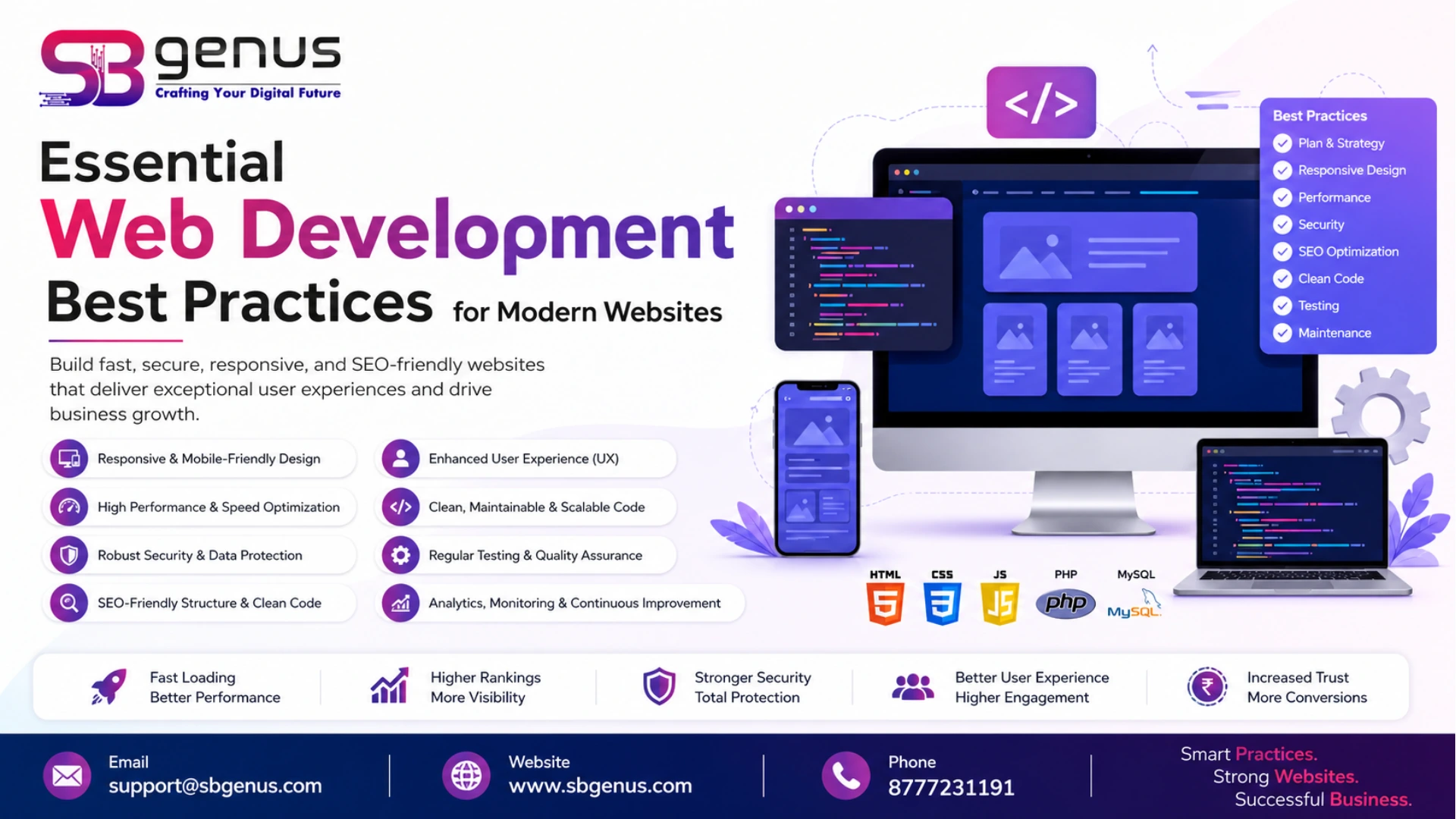
Web development is generally divided into three major categories, each focusing on a different aspect of website creation.
Front-end development focuses on everything users see and interact with on a website. It involves creating layouts, buttons, forms, menus, animations, and responsive designs that work smoothly across desktops, tablets, and smartphones.
Back-end development is responsible for the server-side functionality of a website. It handles business logic, user authentication, database operations, file management, APIs, and communication between the server and the front-end interface.
Full-stack development combines both front-end and back-end development skills. A full-stack developer can build an entire web application from the user interface to the server infrastructure and database management.
Starting a career in web development requires building a strong foundation rather than trying to learn everything at once. Beginners should first understand how websites work, how browsers interpret code, and how different technologies communicate with each other.
Problem-solving is one of the most valuable skills for developers because programming is largely about finding logical solutions to technical challenges. Along with coding skills, developers should also practice debugging, version control, responsive design principles, and basic cybersecurity concepts.
Developing patience and maintaining consistency in learning are equally important, as web development is a continuously evolving field with new tools and technologies emerging regularly.
HTML is the basic building block of every website. It defines the structure of web pages by organizing content into headings, paragraphs, images, forms, and navigation menus.
CSS controls the appearance of websites by adding colors, layouts, spacing, typography, animations, and responsive designs. It transforms plain HTML into visually attractive web pages.
JavaScript makes websites interactive by enabling features such as image sliders, dropdown menus, dynamic forms, live notifications, and real-time updates without refreshing the page.
For server-side development, languages such as PHP, Python, Java, JavaScript (Node.js), C#, and Ruby are widely used depending on project requirements and development preferences.
Front-end development focuses on creating visually appealing and user-friendly interfaces. Developers ensure that websites load quickly, adapt to different screen sizes, and provide a smooth browsing experience regardless of the device being used.
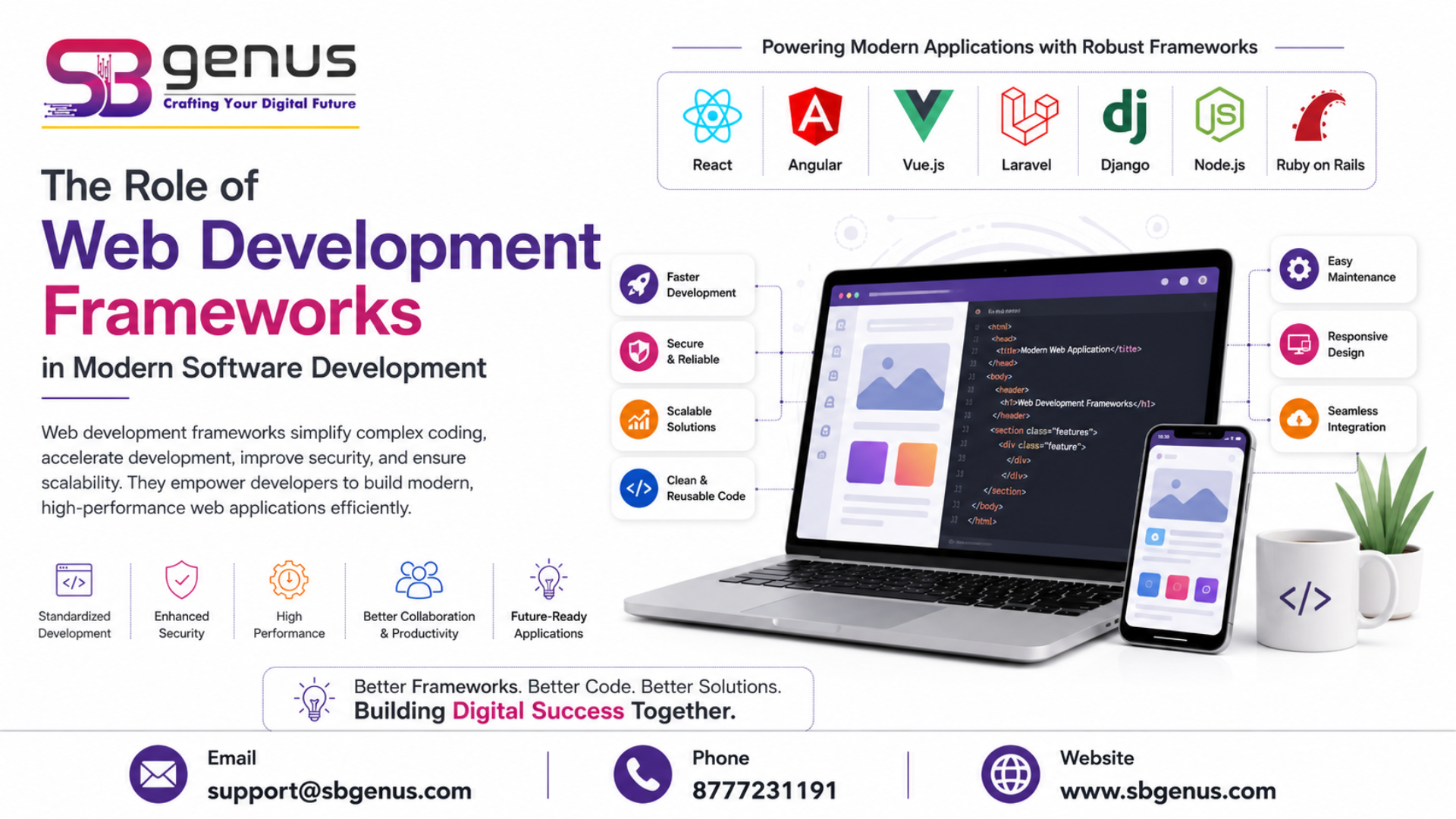
Modern front-end development often utilizes popular frameworks and libraries such as React, Angular, and Vue.js. These technologies simplify the process of building interactive web applications while improving maintainability and performance.
Responsive design has become an essential part of front-end development because users access websites from a variety of devices. Developers use CSS techniques and responsive frameworks to ensure websites look professional on every screen size.
The back-end serves as the engine that powers every dynamic website. It processes user requests, communicates with databases, stores information securely, and generates responses that appear on users' screens.
Whenever users log into an account, place an online order, submit a contact form, or complete a payment transaction, the back-end performs the necessary operations behind the scenes. Developers build secure APIs, manage authentication systems, validate user inputs, and optimize server performance.
Popular back-end frameworks such as Laravel for PHP, Django for Python, Express.js for Node.js, and Spring Boot for Java simplify application development while improving scalability and security.
Databases are responsible for storing and organizing website information. User profiles, product details, blog posts, customer records, payment information, and order histories are all stored inside databases.
Relational databases such as MySQL and PostgreSQL organize information into structured tables with relationships between data. NoSQL databases such as MongoDB provide greater flexibility for handling large volumes of unstructured or semi-structured data.
Understanding how to retrieve, update, delete, and secure data is an important part of becoming a successful web developer.
Professional web developers rely on various tools to improve productivity and maintain code quality. Code editors such as Visual Studio Code provide powerful features for writing and debugging code efficiently. Git enables version control, allowing developers to track changes and collaborate with teams. Platforms like GitHub make it easy to store, manage, and share code repositories.
Developers also use browser developer tools to inspect website elements, identify errors, analyze performance, and test responsive layouts. Package managers and build tools further simplify dependency management and project deployment.
The best way to begin learning web development is by mastering HTML, CSS, and JavaScript before moving to advanced topics. Once these fundamentals are understood, learners can explore responsive design, version control using Git, databases, server-side programming, and modern frameworks.
Building small practical projects is one of the fastest ways to improve coding skills. Personal portfolios, landing pages, blog websites, calculators, weather applications, and task management systems provide valuable hands-on experience.
As confidence grows, developers can contribute to open-source projects, create freelance portfolios, participate in coding challenges, and continuously improve their problem-solving abilities.
Many beginners become discouraged because they compare themselves with experienced developers or attempt to learn too many technologies simultaneously. Web development requires patience, practice, and continuous learning.
Debugging code, understanding programming logic, and adapting to constantly changing technologies are common challenges. However, every error encountered provides an opportunity to gain experience and strengthen problem-solving skills.
Maintaining a structured learning roadmap and building projects regularly are among the most effective ways to overcome these obstacles.
Web development offers diverse career opportunities across industries. Businesses of all sizes require websites and web applications, creating consistent demand for skilled developers.
Professionals can work as front-end developers, back-end developers, full-stack developers, UI developers, web application developers, software engineers, technical consultants, or freelance developers. Many also establish their own agencies, build SaaS products, or develop startups.
With increasing digital transformation worldwide, web development continues to provide strong career growth, competitive salaries, and opportunities for remote work.
Web development is an exciting field that combines creativity, logical thinking, and technical expertise to build modern digital experiences. Although the learning journey may initially seem challenging, mastering the fundamentals step by step makes the process both manageable and rewarding. By understanding HTML, CSS, JavaScript, back-end technologies, databases, and modern development tools, beginners can confidently create professional websites and web applications.
The technology landscape will continue to evolve, making continuous learning an essential part of every developer's career. Those who remain curious, practice consistently, and build real-world projects will be well-positioned to succeed in the rapidly growing web development industry.
Web development is the process of creating, maintaining, and improving websites and web applications using programming languages, databases, servers, and modern development tools.
Most beginners start with HTML, CSS, and JavaScript because these technologies form the foundation of modern website development.
Yes. Web development remains one of the fastest-growing technology careers, offering excellent job opportunities, competitive salaries, freelance work, and remote employment options.
The learning timeline depends on consistency and practice. Many beginners gain a solid understanding within six to twelve months through regular learning and project development.
No. Many successful developers are self-taught or have completed online courses, coding bootcamps, or certification programs while building practical project experience.
Essential tools include Visual Studio Code, Git, GitHub, browser developer tools, package managers, and a local development environment.
Front-end development focuses on the visual interface users interact with, while back-end development manages servers, databases, application logic, and secure data processing.
Yes. Many web developers build successful freelance careers by creating websites, eCommerce stores, custom web applications, and maintenance services for businesses worldwide.
Trusted Clients



.jpg)


.jpg)
.jpg)








SB Genus is a Kolkata-based tech company specializing in custom web development, app development, digital marketing, and startup growth.


© 2017-2026 SB Genus. All rights reserved.