SB Genus
 04 Aug 2026
The Importance of Backend Development in Modern Web Applications
04 Aug 2026
The Importance of Backend Development in Modern Web Applications


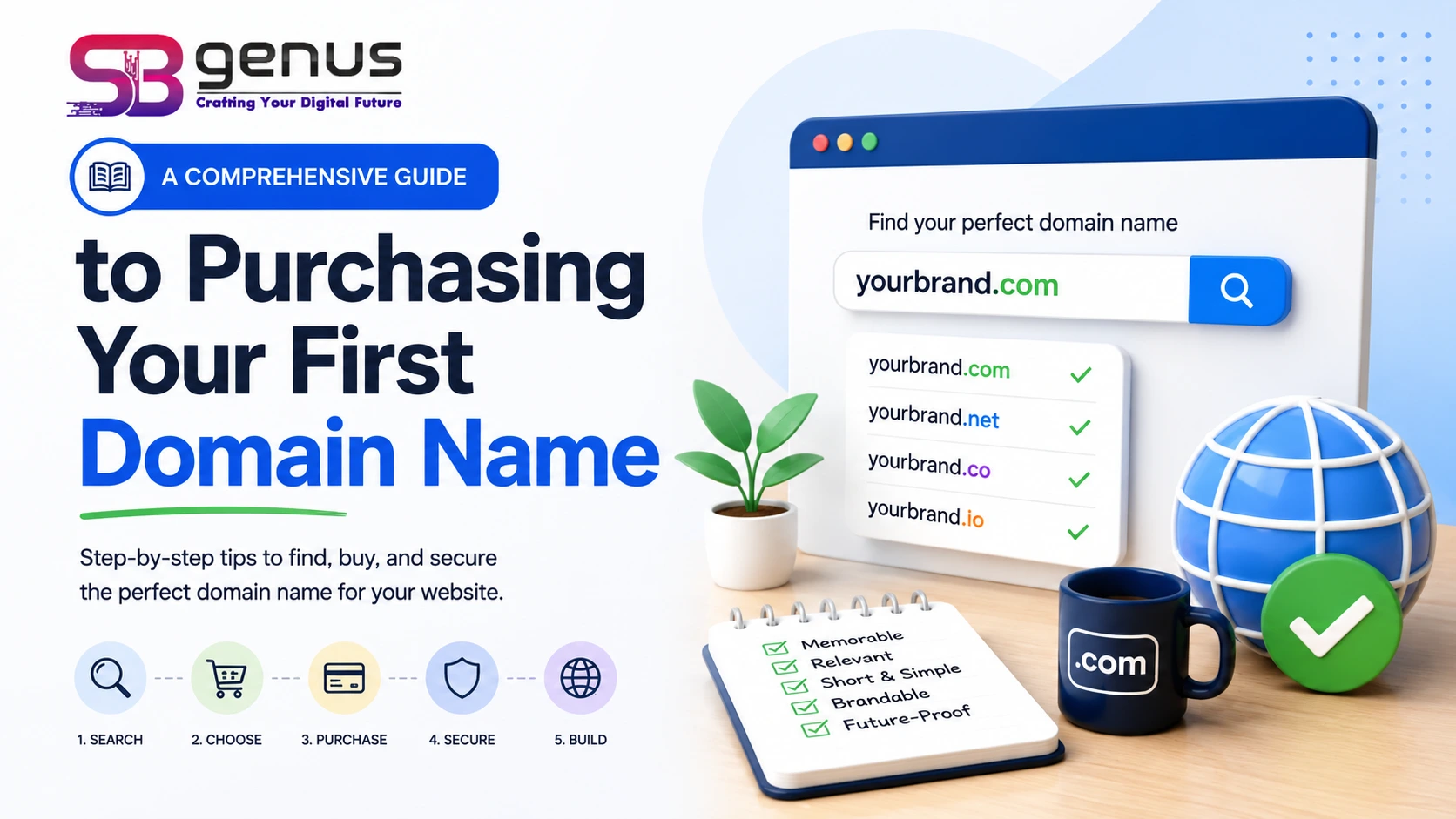
A domain name is the foundation of your online identity. Whether you're starting a business, launching a personal blog, creating an online portfolio, or opening an e-commerce store, your domain name is the first thing visitors notice. It represents your brand, builds credibility, and makes it easier for customers to find you online.
However, purchasing your first domain name can feel overwhelming. With thousands of domain extensions, numerous registrars, and countless naming possibilities, beginners often struggle to make the right decision.
This comprehensive guide will walk you through everything you need to know about purchasing your first domain name—from selecting the perfect name to completing the registration process while avoiding common mistakes.
A domain name is the unique, human-readable address of a website that users enter into their web browser to access your website on the internet. Instead of remembering a long and complex numerical IP address, visitors can simply type a memorable domain name to reach your website quickly and easily.
For example:
Behind every website is an IP address, such as 192.168.0.1, which computers use to identify servers. However, remembering numerical IP addresses is difficult for most users. A domain name acts as a user-friendly alternative, making websites easier to find, remember, and share.
Think of a domain name as your website's digital street address. Just as people use a physical address to locate a home or business, internet users rely on a domain name to visit your website. A professional domain name not only helps customers find your business online but also strengthens your brand identity, builds trust, and creates a lasting impression.
Whether you're launching a business website, an online store, a personal blog, or a portfolio, choosing the right domain name is the first step toward establishing a strong and credible online presence.
Choosing the right domain name is one of the most important decisions when building a website. A well-chosen domain name strengthens your brand identity, improves customer trust, enhances your online marketing efforts, and creates a memorable first impression. While a domain name is not a direct Google ranking factor, it plays a significant role in user experience, brand recognition, and click-through rates—all of which contribute to long-term online success.
A memorable and unique domain name helps customers easily recognize and remember your business. A short, brandable domain is more likely to be shared, searched, and revisited, making it an essential part of your digital branding strategy.
A professional custom domain name makes your business appear more trustworthy and credible than a free subdomain. Customers are far more likely to trust and engage with a website that uses its own domain name.
Example:
✅ yourcompany.com
❌ yourcompany.freewebsite.com
A custom domain also demonstrates professionalism and helps establish confidence among potential customers.
Although Google has confirmed that keywords in domain names are not a major ranking factor, a relevant, easy-to-understand domain name can improve user trust, brand recall, and click-through rates (CTR). When users immediately understand what your website is about, they are more likely to click on your website in search results and remember it for future visits.
A short, simple, and memorable domain name is easier to use across all marketing channels. Whether you're promoting your business online or offline, an easy-to-remember domain increases brand visibility and encourages more direct traffic.
A well-chosen domain name is easier to:
Choosing the right domain name from the beginning creates a strong foundation for your online brand, making it easier to attract visitors, build trust, and grow your business over the long term.
Choosing a short domain name improves brand recognition and makes it easier for users to remember, type, and share your website. Short, simple domains also reduce the chances of typing errors and can improve user experience, which indirectly benefits your website's SEO performance.
Good Examples:
Avoid Long and Complex Domain Names:
A concise domain name is more likely to be remembered by visitors, shared on social media, and used in marketing materials, helping your brand establish a stronger online presence.Make it Easy to Spell
If people can't spell your domain, they may never find your website.
Avoid complicated words and unusual spellings.
If appropriate, include keywords related to your business.
Examples:
When choosing a domain name, avoid using numbers and hyphens whenever possible. They can confuse users, make your website address harder to remember, and increase the chances of typing errors. A clean, simple domain name improves user experience, strengthens your brand identity, and makes it easier for visitors to find and share your website.
Instead of:
best-car-deals-24.com
Choose:
bestcardeals.com
A domain name without numbers or hyphens looks more professional, is easier to pronounce, and is more memorable. This can lead to higher direct traffic, better brand recall, and improved trust among your audience.
Example:
Instead of kolkatamobilecovers.com, one can consider techworld.com
A domain extension, also known as a Top-Level Domain (TLD), is the suffix that appears after the dot in a domain name, such as .com, .net, or .in. Choosing the right domain extension is an important part of building a strong online presence, as it can influence your website's credibility, branding, target audience, and search visibility. While domain extensions are not a direct Google ranking factor, they can improve user trust and click-through rates.
The .com domain extension is the most popular, trusted, and widely recognized TLD worldwide. It is ideal for businesses, startups, blogs, personal brands, e-commerce websites, and professional portfolios. If your desired .com domain name is available, it is generally the best option for creating a credible and memorable online identity.
Best for:
Originally created for networking and technology companies, the .net extension is now widely used across various industries. It serves as an excellent alternative when your preferred .com domain is unavailable and is commonly chosen by technology businesses, SaaS companies, internet service providers, and online platforms.
Best for:
The .org domain extension is commonly associated with non-profit organizations, charities, educational institutions, social initiatives, and community groups. It helps establish trust and credibility for organizations that focus on public service rather than commercial activities.
Best for:
The .in domain extension is India's country-code Top-Level Domain (ccTLD). It is an excellent choice for businesses, startups, bloggers, and e-commerce websites that primarily target customers in India. Using a .in domain can help strengthen your local brand identity and demonstrate your focus on the Indian market.
Best for:
Country-code Top-Level Domains (ccTLDs) are designed for websites targeting specific countries or regions. These extensions help businesses build local trust, improve regional branding, and attract location-specific audiences.
Popular Examples:
If your business primarily serves customers in a particular country, choosing the corresponding country-specific domain extension can enhance your local online presence and improve brand recognition among your target audience.
After choosing your preferred domain name, the next step is to check whether it is available for registration. Since millions of domain names have already been registered, your first choice may not always be available. If your desired domain name is already taken, don't worry—there are several effective ways to find a suitable alternative while maintaining your brand identity.
Here are some proven strategies to find an available domain name:
Instead of:
greenstore.com (Already Registered)
Consider:
Before making a final decision, always verify your domain's availability through a Trusted Domain Registrar. Selecting a domain name that is unique, easy to remember, and relevant to your business can strengthen your brand identity, improve user trust, and contribute to your long-term online success.
Selecting a reliable domain registrar is just as important as choosing the right domain name. A domain registrar is an accredited company that allows you to register, renew, transfer, and manage your domain name. Choosing a trusted registrar ensures your domain remains secure, easy to manage, and protected from unauthorized access.
When comparing domain registrars, consider the following factors before making your decision.
Pricing is one of the first factors to evaluate when purchasing a domain name. While many registrars offer attractive introductory discounts, it's equally important to check their renewal and transfer fees to avoid unexpected costs in the future.
Before registering your domain, compare:
Pro Tip: Choose a registrar with transparent pricing rather than one offering extremely low first-year prices followed by high renewal fees.
Reliable customer support can save valuable time if you encounter technical issues with your domain. Choose a registrar that offers responsive and knowledgeable support through multiple communication channels.
Look for features such as:
A registrar with excellent customer support ensures quick resolution of issues related to domain management, DNS configuration, or renewals.
Your domain name is a valuable digital asset, so security should be a top priority. A reputable domain registrar should provide essential security tools to protect your domain from unauthorized access, transfers, and cyber threats.
Important security features include:
These features help safeguard your website, email services, and online brand from potential security risks.
Managing your domain should be simple, even if you're a beginner. A user-friendly control panel allows you to perform essential tasks without requiring technical expertise.
Choose a registrar that offers an intuitive dashboard for:
An easy-to-use domain management panel simplifies website administration and helps you efficiently manage your online presence as your business grows.
Registering a domain name is a simple and straightforward process that takes only a few minutes. Once you have selected a unique and available domain name, you can complete the registration by following these easy steps. Understanding the domain registration process will help you secure your online identity quickly and avoid common mistakes.
Begin by entering your desired domain name into the search tool provided by a trusted domain registrar. The system will instantly check whether your preferred domain is available for registration.
Tip: Have a few alternative domain names ready in case your first choice is already taken.
If your preferred domain name is available, you can proceed with the registration process. If it has already been registered, consider trying a different domain extension (such as .net, .org, or .in) or modifying the domain name by adding your brand name, location, or business niche.
Select how long you want to register your domain name. Most domain registrars offer flexible registration periods, including:
Registering your domain for multiple years can reduce the risk of accidental expiration and demonstrates a long-term commitment to your online presence.
If available, add WHOIS Privacy Protection during checkout. This feature helps protect your personal contact information by preventing it from being publicly displayed in the WHOIS database, reducing spam, unwanted marketing calls, and potential security risks.
Review your order details, complete the payment, and finalize your domain registration. Once the payment is successfully processed, the domain name will be registered under your account, giving you full ownership and management access.
You can then configure DNS settings, connect your domain to a web hosting provider, create professional email addresses, and begin building your website.
Purchasing a domain name involves more than simply choosing a memorable web address. To ensure your website remains secure, accessible, and easy to manage, it's important to look for features that provide long-term value and protection. A reliable domain registrar should offer the following essential features.
Enable auto-renewal to ensure your domain name is renewed automatically before it expires. This helps prevent accidental domain expiration, website downtime, email disruption, and the risk of losing your domain to another buyer.
A good registrar should provide an easy-to-use DNS management panel. DNS settings allow you to connect your domain name to your web hosting provider, configure professional email accounts, create subdomains, and integrate third-party services efficiently.
Email forwarding allows you to create a professional business email address using your domain name, enhancing your brand's credibility and trustworthiness.
Example:
A custom email address creates a more professional impression than using free email services.
Domain Lock is an important security feature that prevents unauthorized domain transfers. Keeping your domain locked protects your website from accidental or malicious transfer requests and adds an extra layer of security to your online assets.
Most domain registrars offer WHOIS Privacy Protection, which hides your personal contact information from public WHOIS databases (where supported by the domain extension and local regulations). This feature helps reduce spam emails, unwanted marketing calls, and protects your privacy.
Buying your first domain name is a significant step toward establishing your online presence. However, many beginners make avoidable mistakes that can affect their branding, website performance, and long-term success. Avoiding the following common mistakes will help you choose a domain name that supports your business goals.
Don't purchase the first available domain name you find. Compare multiple domain registrars, review their pricing, customer support, security features, and renewal policies before making a decision.
Many registrars offer attractive first-year discounts but charge significantly higher renewal fees. Always review the long-term renewal pricing to avoid unexpected expenses.
Avoid selecting domain names based on current trends, slang, or temporary events. Instead, choose a timeless and brandable domain name that will remain relevant as your business grows.
Before registering a domain name, verify that it does not infringe on an existing trademark. Choosing a trademarked name could result in legal disputes, loss of your domain, or costly rebranding.
If you fail to renew your domain before its expiration date, your website and email services may stop working, and your domain could become available for someone else to register. Enabling auto-renewal is one of the easiest ways to protect your online identity.
A complicated domain name increases the likelihood of typing errors and makes it harder for customers to remember your website. Choose a domain name that is short, easy to spell, easy to pronounce, and simple to share across marketing channels.
By avoiding these common mistakes and selecting a secure, memorable, and easy-to-manage domain name, you'll create a strong foundation for your website, improve user trust, and establish a successful long-term online presence.
Purchasing your first domain name is one of the most important steps in establishing your online presence. A well-chosen domain not only strengthens your brand identity but also makes your website easier to find, remember, and trust. By selecting a short, memorable name, choosing the right extension, registering through a reputable provider, and enabling essential security features like domain lock and auto-renewal, you can avoid many common pitfalls.
Take the time to research your options before making a purchase. Your domain is more than just a web address—it's a long-term investment in your digital future. Whether you're building a business website, an online store, or a personal portfolio, the right domain name lays the foundation for lasting online success.
Trusted Clients



.jpg)


.jpg)
.jpg)







SB Genus is a Kolkata-based tech company specializing in custom web development, app development, digital marketing, and startup growth.


© 2017-2026 SB Genus. All rights reserved.