SB Genus
 04 Aug 2026
The Importance of Backend Development in Modern Web Applications
04 Aug 2026
The Importance of Backend Development in Modern Web Applications


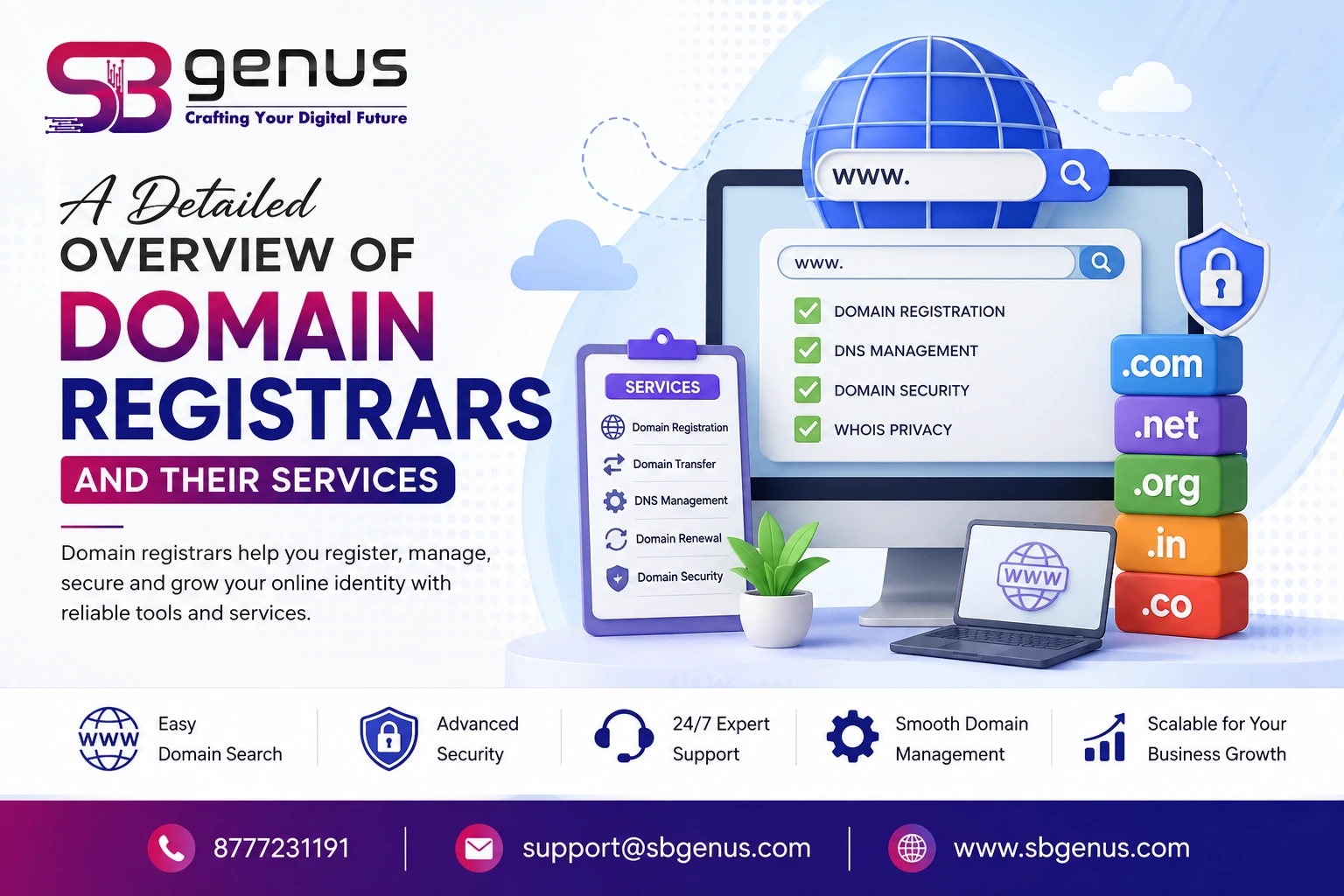
In today's digital-first world, a professional online presence begins with choosing the right domain name. Whether you're launching a business website, an eCommerce store, a blog, or a personal portfolio, your domain name serves as your unique digital identity. However, purchasing a domain involves more than simply selecting a name—you also need a trusted domain registrar to register and manage it.
A domain registrar provides a variety of essential services beyond domain registration. From domain renewals and transfers to DNS management, email hosting, security, and privacy protection, registrars play a critical role in ensuring your website remains secure, accessible, and easy to manage.
This comprehensive guide explains what domain registrars are, how they work, the services they offer, and how to choose the best registrar for your business.
A domain name is the unique address that people type into a web browser to access a website. Instead of remembering complex numerical IP addresses, users can simply enter a memorable domain name to visit a website quickly and easily. A well-chosen domain name not only improves your online visibility but also strengthens your brand identity and makes your business easier to find.
Every domain name typically consists of two important components:
Selecting a short, memorable, and brand-focused domain name helps improve customer trust, increases brand recognition, and contributes to better online marketing success.
A domain registrar is an ICANN-accredited company or an organization authorized by a country's domain authority to register, renew, transfer, and manage domain names. Domain registrars serve as the bridge between domain registries and website owners, making it possible for individuals and businesses to secure their preferred domain names.
When you purchase a domain name, it is the registrar that processes the registration and maintains your ownership records.
Most domain registrars offer a complete range of domain management services, including:
Without a trusted domain registrar, businesses would not be able to legally register or manage their website domains.
A domain registrar works by checking the availability of your preferred domain name through the appropriate domain registry. If the domain is available, the registrar registers it on your behalf and provides tools to manage it throughout its lifecycle.
The domain registration process typically follows these steps:
Enter your desired domain name into the registrar's domain search tool to check its availability.
The registrar communicates with the domain registry to determine whether the domain is already registered or available for purchase.
If the domain is available, you can register it for a period ranging from one to ten years, depending on your preference.
The registrar submits your registration details to the official domain registry, which records you as the domain owner.
After registration, you can configure DNS records, nameservers, email settings, and website hosting to make your website accessible online.
Your registrar provides an easy-to-use dashboard where you can renew your domain, update contact information, modify DNS settings, transfer the domain, and enable security features whenever required.
Modern domain registrars provide far more than simple domain registration. They offer a complete suite of domain management and website services to help businesses establish and maintain a secure online presence.
The primary service offered by every domain registrar is domain name registration. Most registrars support hundreds of domain extensions, including:
Choosing the right domain extension helps improve your brand's credibility and online presence.
Since domain names are registered for a fixed period, registrars provide renewal services along with automatic renewal options and reminder notifications. Timely renewal prevents your domain from expiring and protects your business identity.
If you're unhappy with your current provider, you can easily transfer your domain to another registrar offering better pricing, customer support, security, or additional features without affecting your website.
A reliable registrar provides complete DNS management tools, allowing you to configure essential DNS records, including:
Proper DNS configuration ensures that your website, business emails, and other online services function correctly.
WHOIS Privacy Protection safeguards your personal information by hiding details such as:
This feature protects your identity from spam, phishing attacks, and unauthorized access to your personal information.
Domain Lock is an essential security feature that prevents unauthorized domain transfers. It helps protect your valuable domain from theft or accidental ownership changes.
Many domain registrars also provide SSL Certificates to secure your website. SSL certificates:
Registrars often offer professional email hosting services that allow you to create branded email addresses such as:
A professional email address enhances your company's credibility and builds customer trust.
Many domain registrars also provide reliable web hosting solutions, including:
Purchasing both your domain name and web hosting from the same provider simplifies website management and technical support.
Domain forwarding automatically redirects visitors from one domain name to another.
Example:
yourbrand.in → yourbrand.com
This helps protect your brand, capture additional traffic, and ensure users always reach your primary website.
Most registrars allow users to create unlimited subdomains, such as:
Subdomains help organize different sections of your website while maintaining a consistent brand identity.
Bulk domain registration is particularly useful for organizations managing multiple websites.
It is ideal for:
Bulk domain management saves time, simplifies administration, and helps businesses efficiently manage large domain portfolios.
Choosing the best domain registrar is an important decision that can significantly impact your website's security, performance, and long-term success. Before registering a domain name, compare different registrars based on their pricing, customer support, security features, and additional services to ensure you select the right provider for your business.
Pricing is one of the first factors to consider when choosing a domain registrar. While many companies advertise low introductory prices, it's important to review the total cost of ownership before making a purchase.
Compare the following:
Always choose a domain registrar with transparent pricing and avoid providers that include hidden fees or expensive renewal charges.
Technical issues can occur at any time, making responsive customer support essential. A reliable domain registrar should offer multiple support channels to help resolve problems quickly.
Look for providers offering:
Excellent customer support ensures that your website and domain remain operational with minimal downtime.
Protecting your domain name is critical because it represents your online identity. The best domain registrars include advanced security features that safeguard your domain from unauthorized access and cyber threats.
Essential security features include:
These security measures help protect your website, customer information, and business reputation.
Managing your domain should be simple and convenient. Choose a registrar that provides an intuitive control panel where you can easily update DNS records, renew domains, manage nameservers, and configure email settings without technical difficulties.
A user-friendly dashboard saves time and simplifies domain administration.
Before selecting a registrar, research its reputation within the industry. Read customer reviews, compare ratings, and evaluate the company's reliability.
Consider factors such as:
A well-established domain registrar is more likely to provide dependable services and long-term support.
Registering your domain with a trusted and reputable domain registrar offers numerous advantages beyond simply securing a domain name. The right registrar helps protect your website, simplifies management, and supports your business growth.
Reliable registrars provide advanced security features such as Domain Lock, WHOIS Privacy Protection, DNSSEC, and Two-Factor Authentication to protect your domain from unauthorized transfers and cyber threats.
An intuitive management dashboard allows you to manage domain renewals, DNS settings, nameservers, email services, and security features from one centralized location.
Professional customer support ensures that any domain-related issues are resolved quickly, minimizing website downtime and protecting your online presence.
Automatic renewal services help prevent accidental domain expiration, ensuring uninterrupted website availability and protecting your business identity.
As your business expands, a trusted registrar makes it easy to register additional domain names, manage multiple websites, and add hosting or email services without complications.
Registering multiple domain extensions and enabling security features helps protect your brand from cybersquatting, impersonation, and unauthorised domain registrations.
By choosing a reliable domain registrar, you invest in the long-term stability, security, and growth of your online business.
Registering a domain name is a crucial step in building your online presence. However, many businesses make common mistakes that can lead to unnecessary expenses, security risks, or branding issues.
Avoid these common mistakes:
Avoiding these mistakes helps ensure a secure, professional, and future-ready online presence.
Your domain name is one of the most valuable digital assets your business owns. Choosing the right domain registrar not only secures your domain but also provides the tools and services needed to maintain a professional and secure online presence.
A reliable domain registrar helps your business by:
Whether you're launching a new website or managing multiple domains, selecting a trusted domain registrar ensures your website remains secure, reliable, and easy to manage. Investing in the right registrar today will help safeguard your digital assets and support your business's long-term online success.
A domain registrar does much more than sell domain names. It provides the tools and services necessary to manage your online identity, including domain registration, renewals, DNS management, security, transfers, business email, and hosting.
Selecting a reputable registrar is a long-term investment in your business's online success. Compare pricing, security, customer support, and available features before making your decision. The right registrar will help keep your website secure, professional, and accessible for years to come.
A domain registrar is an accredited company that allows users to register, renew, transfer, and manage domain names.
A registrar sells and manages domains for customers, while a registry maintains the database and infrastructure for a specific domain extension.
Yes. Most domains can be transferred after meeting eligibility requirements, typically after 60 days from registration or a previous transfer.
WHOIS Privacy hides your personal contact information from public databases, helping reduce spam and privacy risks.
No. However, web hosting is required if you want to publish a website using your domain.
Most registrars allow registration periods from one to ten years.
An expired domain typically enters a grace period followed by a redemption period. If it is not renewed, it may become available for public registration.
Look for transparent pricing, reliable customer support, robust security features, an intuitive dashboard, and positive customer reviews.
Trusted Clients



.jpg)


.jpg)
.jpg)







SB Genus is a Kolkata-based tech company specializing in custom web development, app development, digital marketing, and startup growth.


© 2017-2026 SB Genus. All rights reserved.