SB Genus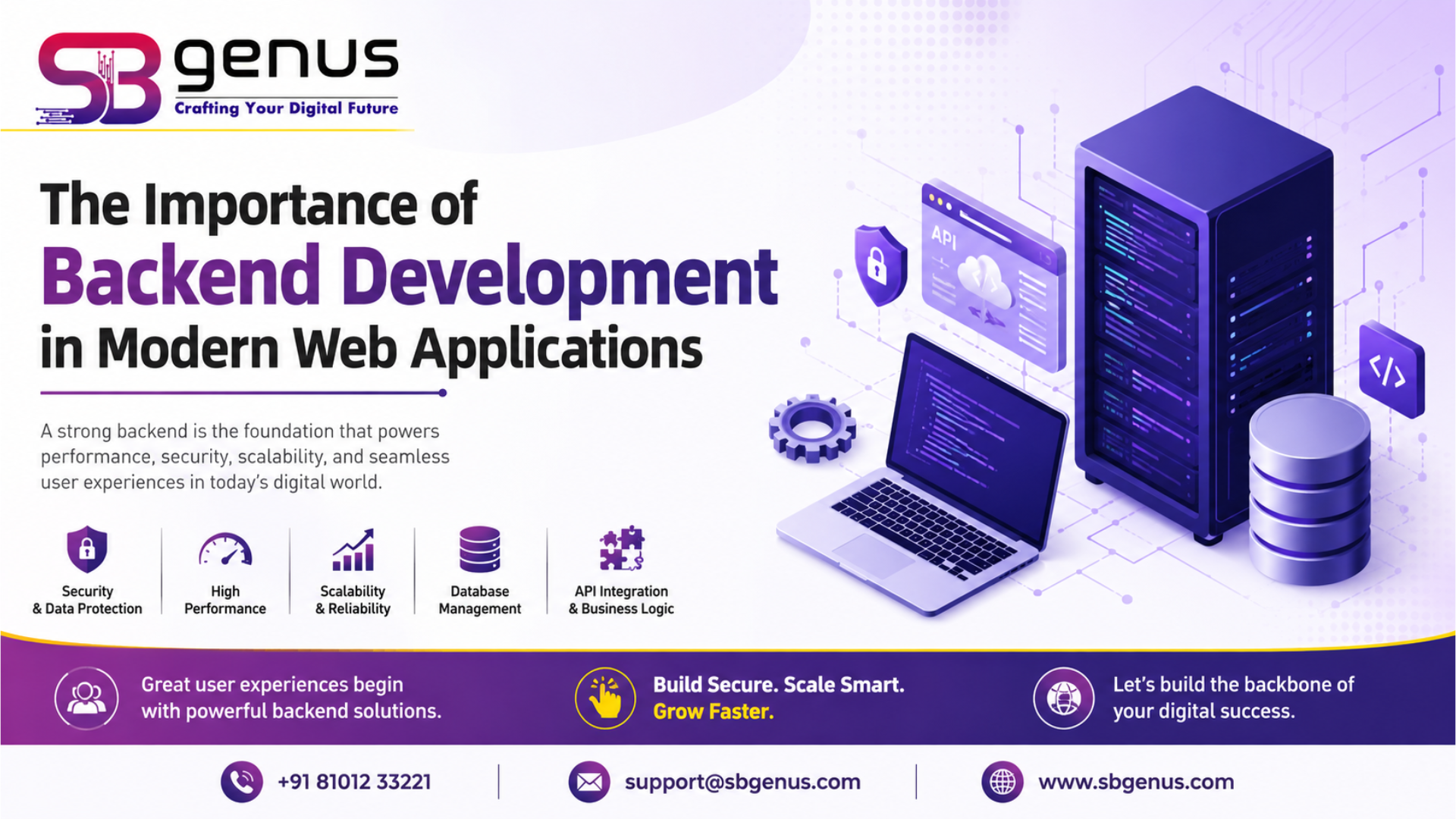
 04 Aug 2026
The Importance of Backend Development in Modern Web Applications
04 Aug 2026
The Importance of Backend Development in Modern Web Applications


ERP and CRM Explained: A Complete Guide for Modern Businesses
Introduction
In today's fast-paced digital world, businesses need powerful software solutions to streamline operations, improve customer relationships, and drive growth. Two of the most important business management systems are ERP (Enterprise Resource Planning) and CRM (Customer Relationship Management).
While both systems help organizations become more efficient and profitable, they serve different purposes. Understanding ERP and CRM can help businesses choose the right technology to improve productivity, customer satisfaction, and overall performance. At SB Genus, we help businesses implement customized ERP and CRM solutions that streamline operations and accelerate growth. In this comprehensive guide, we'll explain what ERP and CRM are, how they work, their benefits, and why modern businesses should consider implementing them.
What is ERP (Enterprise Resource Planning)?
ERP (Enterprise Resource Planning) is a business management software that integrates various business processes into a single centralized system. It enables organizations to manage and automate critical operations across departments.
SB Genus develops scalable ERP solutions tailored to the unique requirements of businesses across manufacturing, retail, healthcare, education, and service industries.
Instead of using separate software for accounting, inventory, HR, and procurement, ERP brings everything together on one platform.
Key ERP Modules
How ERP Works
ERP collects data from different departments and stores it in a centralized database. This allows teams to access real-time information and collaborate more effectively.
For example, when a sales order is generated, the ERP system can automatically update inventory levels, generate invoices, and notify the finance team.
Benefits of ERP Software
1. Improved Operational Efficiency
Automation reduces manual tasks and increases productivity.
2. Centralized Data Management
All business information is stored in one place, eliminating data duplication.
3. Better Decision Making
Real-time reports and analytics help management make informed decisions.
4. Enhanced Collaboration
Departments can access shared data, improving communication and workflow.
5. Cost Reduction
Efficient resource management reduces operational costs.
With a customised ERP solution from SB Genus, organisations can automate complex workflows, improve data accuracy, and gain complete visibility into their operations.
What is CRM (Customer Relationship Management)?
CRM (Customer Relationship Management) is a software designed to manage customer interactions, sales activities, marketing campaigns, and customer support processes.
The primary objective of a CRM system is to improve customer relationships and increase revenue.
Key CRM Features
How CRM Works
CRM stores customer information and tracks every interaction with prospects and existing customers.
Sales teams can monitor leads, schedule follow-ups, and track opportunities, while marketing teams can run targeted campaigns based on customer behaviour.
Benefits of CRM Software
1. Improved Customer Relationships
Businesses can provide personalized experiences by understanding customer preferences and history.
2. Increased Sales
CRM helps sales teams manage opportunities and close deals faster.
3. Better Lead Management
Track leads from inquiry to conversion efficiently.
4. Enhanced Customer Service
Support teams can quickly access customer information and resolve issues effectively.
5. Data-Driven Marketing
Businesses can create targeted campaigns that improve engagement and conversions.
A customized CRM developed by SB Genus enables businesses to increase customer engagement, improve conversion rates, and enhance overall customer satisfaction.
ERP and CRM: Key Differences
Although ERP and CRM are both business management tools, their primary focus differs.
Trusted Clients



.jpg)

.jpg)
.jpg)








SB Genus is a Kolkata-based tech company specializing in custom web development, app development, digital marketing, and startup growth.


© 2017-2026 SB Genus. All rights reserved.