SB Genus
 04 Aug 2026
The Importance of Backend Development in Modern Web Applications
04 Aug 2026
The Importance of Backend Development in Modern Web Applications


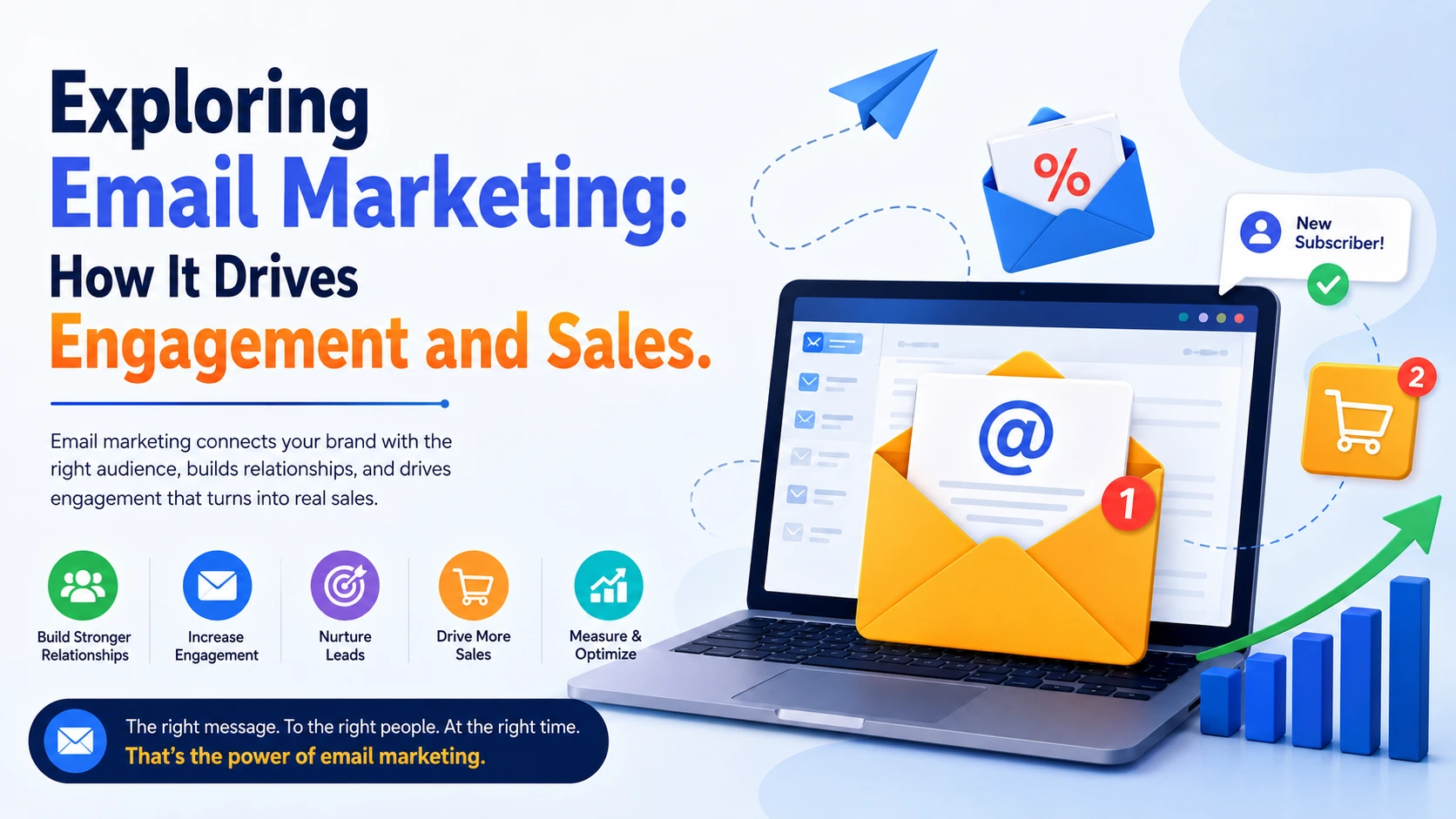
In today's competitive digital landscape, businesses have more opportunities than ever to connect with potential customers. Among the many digital marketing channels available, email marketing continues to deliver exceptional results by helping businesses communicate directly with their audience. Whether you're promoting products, sharing valuable content, or nurturing leads, email marketing remains one of the most reliable ways to engage customers and increase sales.
Unlike social media platforms, where changing algorithms limits your reach, email gives businesses direct access to their subscribers' inboxes. This allows companies to create personalized experiences, strengthen customer relationships, and encourage repeated purchases. When executed strategically, email marketing can significantly improve Customer Engagement, enhance brand loyalty, and generate one of the highest Returns On Investment (ROI) among all digital marketing channels.
This guide explores how email marketing works, its key benefits, and the strategies businesses can use to drive engagement and increase revenue.
Email marketing is a powerful digital marketing strategy that involves sending targeted and personalized emails to a list of subscribers who have opted in to receive communications from your business. It is one of the most effective ways to promote products and services, share valuable content, nurture leads, and build long-term customer relationships.
Businesses of all sizes use email marketing campaigns to communicate directly with their audience, increase brand awareness, drive website traffic, generate qualified leads, and boost conversions. Unlike many other marketing channels, email marketing allows companies to deliver personalized messages based on customer interests, behavior, and purchase history, resulting in higher engagement and improved Return On Investment (ROI).
A well-planned email marketing strategy helps businesses achieve multiple marketing objectives, including:
Because email marketing is permission-based, businesses communicate with subscribers who have already shown interest in their brand. This results in higher open rates, better customer engagement, stronger brand loyalty, and increased sales compared to many traditional marketing methods. When combined with automation, personalization, and audience segmentation, email marketing becomes a highly effective tool for nurturing leads and converting prospects into loyal customers.
Despite the rise of social media and instant messaging platforms, email marketing remains one of the most effective digital marketing strategies.
Businesses across industries continue to invest in email marketing because it consistently delivers measurable results.
Email marketing is one of the most effective digital marketing strategies for businesses looking to increase customer engagement, generate qualified leads, and boost sales. Whether you're a startup or an established brand, a well-planned email marketing strategy can help you build stronger customer relationships while delivering one of the highest Returns on Investment (ROI) among all digital marketing channels.
Below are some of the key benefits of email marketing for businesses of all sizes.
One of the biggest advantages of email marketing is its affordability. Compared to traditional advertising methods such as print media, television, or direct mail, email marketing enables businesses to reach thousands of subscribers instantly at a fraction of the cost. With minimal investment, companies can create, automate, and manage highly targeted campaigns that deliver measurable results.
Modern email marketing platforms allow businesses to deliver highly personalized messages based on customer data and behavior. Personalized emails make subscribers feel valued, resulting in higher open rates, better click-through rates, and improved conversions.
Businesses can personalize emails using:
By sending relevant content to the right audience at the right time, businesses can improve customer engagement, build trust, and encourage long-term loyalty.
Retaining existing customers is often more cost-effective than acquiring new ones. Email marketing helps businesses stay connected with their audience through regular communication, keeping the brand top-of-mind and encouraging repeat purchases.
Businesses can engage customers by sending:
Consistent communication strengthens customer relationships, increases brand trust, and improves customer lifetime value.
Every email campaign provides an opportunity to drive targeted traffic back to your website. By including relevant links and compelling Call-To-Action (CTA) buttons, businesses can encourage subscribers to explore their products, services, blogs, or landing pages.
Email campaigns can direct users to:
Higher website traffic often leads to improved lead generation, increased conversions, and greater sales opportunities.
Consistent email marketing campaigns help businesses maintain regular communication with their audience, reinforcing their brand identity over time. Every email serves as an opportunity to showcase your company's values, expertise, products, and services.
A consistent email marketing strategy helps businesses:
The more frequently customers receive valuable and relevant emails, the more likely they are to remember your brand when making purchasing decisions.
The benefits of email marketing go beyond simply sending promotional emails. A strategic email marketing campaign helps businesses generate qualified leads, nurture prospects, improve customer engagement, increase website traffic, build brand loyalty, and drive long-term sales growth. By combining personalization, automation, audience segmentation, and valuable content, businesses can maximize the effectiveness of every email they send and achieve sustainable business success.
Building strong customer relationships is essential for long-term business success, and email marketing is one of the most effective ways to achieve it. By delivering personalized, timely, and valuable content directly to subscribers' inboxes, businesses can increase customer engagement, build trust, and encourage repeat interactions.
A successful email marketing strategy focuses on delivering the right message to the right audience at the right time. Here are some proven ways email marketing improves customer engagement.
Personalization is one of the biggest strengths of email marketing campaigns. Customers are more likely to open, read, and interact with emails that are tailored to their interests, preferences, and previous interactions with your business.
Examples of personalized email content include:
Personalized emails create a better customer experience, improve open rates, increase Click-Through Rates (CTR), and strengthen long-term customer relationships.
Providing informative and valuable content through regular newsletters helps establish your business as an industry expert while keeping your audience engaged.
Your newsletters can include:
Educational email newsletters build trust, increase brand authority, and encourage subscribers to return to your website for more valuable information.
Interactive emails encourage subscribers to actively participate rather than simply reading the content. This leads to higher engagement and improved user experience.
Examples of interactive email elements include:
Interactive email campaigns increase click-through rates, improve engagement, and make your emails more memorable.
Email automation allows businesses to send timely, relevant messages based on customer actions without manual effort. Automated emails ensure that customers receive the right information at every stage of their journey.
Common automated email campaigns include:
Automated follow-up emails improve customer satisfaction, save valuable time, and maintain consistent communication with your audience.
A successful email marketing strategy includes different types of email campaigns designed to achieve specific business goals. From welcoming new subscribers to nurturing leads and increasing customer retention, each type of email marketing campaign plays an important role in improving customer engagement, driving conversions, and boosting sales.
Below are the most common types of email marketing campaigns used by businesses to connect with their audience and achieve long-term growth.
Welcome emails are the first emails sent to new subscribers after they join your mailing list. These emails create a positive first impression, introduce your brand, and help build trust from the very beginning.
A welcome email may include:
A strong welcome email campaign increases engagement and encourages subscribers to interact with your brand.
Promotional email campaigns are designed to increase sales by informing subscribers about special offers, discounts, new products, and limited-time deals. These emails encourage immediate action through compelling content and strong calls-to-action (CTAs).
Common promotional emails include:
Promotional emails are one of the most effective ways to boost conversions and increase revenue.
Email newsletters help businesses maintain regular communication with their audience by sharing valuable and informative content. Consistent newsletters strengthen customer relationships, increase brand authority, and keep subscribers engaged.
Newsletter content may include:
Well-crafted newsletters position your business as a trusted industry expert.
Transactional emails are automatically sent after a customer completes a specific action. These emails provide essential information while enhancing the overall customer experience.
Examples of transactional emails include:
Because transactional emails have high open rates, they also provide opportunities to strengthen customer relationships.
Re-engagement email campaigns are designed to reconnect with inactive subscribers who have stopped interacting with your emails or website. These campaigns help recover lost customers and improve customer retention.
Re-engagement emails may include:
These campaigns encourage inactive subscribers to reconnect with your brand.
Event invitation emails help businesses promote both online and offline events while encouraging registrations and attendance. They are ideal for increasing audience participation and generating qualified leads.
Businesses use event invitation emails to promote:
A well-designed event email campaign increases registrations, improves attendance, and strengthens customer engagement.
Selecting the right type of email marketing campaign depends on your business objectives and your audience's stage in the customer journey. By combining welcome emails, newsletters, promotional campaigns, transactional emails, re-engagement campaigns, and event invitations, businesses can create a comprehensive email marketing strategy that improves customer engagement, nurtures leads, increases conversions, and drives long-term business growth.
Implementing the right email marketing best practices can significantly improve your campaign performance, increase customer engagement, boost conversion rates, and maximize your return on investment (ROI). Whether you're sending newsletters, promotional emails, or automated campaigns, following these proven strategies will help you achieve better results.
Your subject line is the first thing subscribers see, making it one of the most important elements of any email marketing campaign. A compelling subject line can dramatically improve your email open rate and encourage recipients to engage with your content.
An effective subject line should be:
Strong subject lines increase open rates and improve the overall success of your email marketing strategy.
With the majority of users checking emails on smartphones and tablets, mobile-friendly email design is essential. A responsive email ensures subscribers have a seamless experience regardless of the device they use.
Make sure your emails include:
Optimizing for mobile devices improves user experience, reduces bounce rates, and increases click-through rates (CTR).
Every email should guide readers toward a specific goal. A strong Call-to-Action (CTA) encourages subscribers to take the next step, whether it's making a purchase, downloading a guide, or contacting your business.
Examples of effective CTAs include:
Clear and compelling CTAs help improve conversions and maximize the effectiveness of your email campaigns.
Audience segmentation is one of the most effective email marketing strategies for delivering personalized content. By dividing your subscribers into targeted groups, you can send more relevant emails that generate higher engagement and better conversion rates.
Segment your audience based on:
Personalized and segmented email campaigns consistently outperform generic email broadcasts.
Continuous testing helps improve campaign performance over time. A/B testing allows businesses to compare different versions of an email to determine which elements generate the best results.
You can test:
Regular testing and optimisation lead to higher open rates, improved click-through rates, and increased conversions.
Even the best email marketing strategy can fail if common mistakes are overlooked. Avoiding these issues helps improve email deliverability, customer engagement, and overall campaign performance.
Common email marketing mistakes include:
By avoiding these mistakes, businesses can improve customer trust, increase engagement, and achieve better marketing results.
Tracking the right email marketing metrics helps businesses understand what's working and identify opportunities for improvement. Regular performance analysis allows marketers to optimize future campaigns and maximize return on investment.
The Open Rate measures the percentage of recipients who open your email. It indicates how effective your subject line and sender name are at capturing attention.
The Click-Through Rate (CTR) measures how many recipients clicked on links or CTA buttons within your email. A higher CTR indicates strong engagement and compelling content.
The Conversion Rate measures the percentage of subscribers who completed a desired action, such as making a purchase, filling out a form, downloading a resource, or registering for an event.
The Bounce Rate indicates the percentage of emails that could not be delivered to recipients. Monitoring bounce rates helps maintain a healthy email list and improves sender reputation.
The Unsubscribe Rate measures how many subscribers opt out of receiving future emails. A high unsubscribe rate may indicate that your content, frequency, or targeting needs improvement.
Return on Investment (ROI) measures the revenue generated compared to the total cost of your email marketing campaigns. Email marketing consistently delivers one of the highest ROIs among all digital marketing channels.
Regularly monitoring these key performance indicators (KPIs) enables businesses to optimize future email campaigns, improve customer engagement, and increase overall marketing success.
As technology continues to evolve, email marketing is becoming more intelligent, personalized, and data-driven. Businesses that adopt emerging trends can deliver more relevant customer experiences while improving engagement and conversion rates.
AI-powered email marketing enables businesses to deliver highly personalized content, product recommendations, and subject lines based on customer behavior and preferences.
Predictive analytics helps marketers anticipate customer needs, optimize send times, and recommend products based on historical data and purchasing behavior.
Interactive elements such as quizzes, polls, image carousels, countdown timers, and embedded videos encourage greater customer participation and improve engagement.
Modern email marketing goes beyond using a subscriber's name. Hyper-personalization delivers highly relevant content based on browsing history, purchase behavior, interests, and real-time interactions.
Automated emails triggered by customer actions—such as abandoned carts, product views, downloads, or purchases—help businesses deliver timely and highly relevant messages that increase conversions.
AI-driven segmentation enables marketers to create highly targeted campaigns for specific customer groups, resulting in improved open rates, click-through rates, and customer satisfaction.
As data privacy regulations continue to evolve, businesses are focusing on transparent data collection, subscriber consent, and secure email marketing practices to build trust and maintain compliance.
Artificial Intelligence is helping marketers generate optimized subject lines, email copy, product recommendations, and personalized content that improves campaign performance while reducing manual effort.
Keeping up with the latest email marketing trends enables businesses to remain competitive in an increasingly digital marketplace. By combining AI, automation, personalization, audience segmentation, and data-driven decision-making, companies can create more engaging email campaigns, strengthen customer relationships, and achieve sustainable business growth.
Email marketing remains one of the most powerful digital marketing strategies for businesses looking to build meaningful customer relationships, increase engagement, and drive long-term sales growth. Its ability to deliver personalized, targeted, and measurable communication makes it an essential component of every successful marketing strategy.
By focusing on valuable content, audience segmentation, automation, mobile optimization, and continuous performance analysis, businesses can create highly effective email campaigns that resonate with their audience. Whether you're a startup, small business, or large enterprise, investing in email marketing can help strengthen customer loyalty, improve brand visibility, and generate sustainable business growth.
Email marketing is a digital marketing strategy that involves sending targeted emails to subscribers to promote products, services, share valuable content, nurture leads, and build long-term customer relationships.
Email marketing provides businesses with a direct communication channel to their audience, helping improve customer engagement, generate leads, increase sales, and deliver one of the highest returns on investment (ROI) among digital marketing strategies.
The ideal email frequency depends on your audience and business goals. Most businesses achieve good results by sending emails weekly or bi-weekly while ensuring every email provides valuable and relevant content.
A successful email marketing campaign includes personalized content, audience segmentation, compelling subject lines, mobile-friendly design, valuable information, clear calls-to-action (CTAs), and continuous performance optimization.
Yes. Email marketing is affordable, scalable, and highly effective for businesses of all sizes. It helps small businesses build customer relationships, generate leads, and increase sales without requiring a large marketing budget.
Some of the most popular email marketing platforms include Mailchimp, Brevo, ActiveCampaign, HubSpot, Constant Contact, ConvertKit, Klaviyo, and GetResponse. The best platform depends on your business size, budget, and marketing objectives.
You can grow your email list by using website signup forms, lead magnets, newsletters, webinars, free resources, exclusive discounts, social media promotions, and high-converting landing pages that encourage visitors to subscribe.
Key metrics include Open Rate, Click-Through Rate (CTR), Conversion Rate, Bounce Rate, Unsubscribe Rate, Click-to-Open Rate (CTOR), and Return on Investment (ROI). Monitoring these metrics helps optimize future campaigns.
Email marketing involves sending campaigns manually or on a schedule, while email automation automatically sends personalised emails based on customer actions, such as signing up, making a purchase, or abandoning a shopping cart.
Email marketing increases sales by nurturing leads, promoting products, recovering abandoned carts, encouraging repeat purchases, offering personalized recommendations, and delivering targeted promotional campaigns that motivate customers to take action.
Audience segmentation is the process of dividing your email subscribers into smaller groups based on demographics, interests, purchase history, behavior, or engagement levels. Segmentation allows businesses to send more relevant and personalized emails.
Email marketing and social media marketing serve different purposes. Email marketing provides direct communication, higher personalization, and better conversion rates, while social media helps increase brand awareness and audience reach. Combining both strategies often delivers the best results.
You can improve email open rates by writing compelling subject lines, personalizing emails, sending messages at the right time, maintaining a clean email list, and delivering valuable content that matches your subscribers' interests.
Common mistakes include purchasing email lists, sending too many emails, ignoring mobile optimization, using misleading subject lines, failing to personalize content, neglecting audience segmentation, and not tracking campaign performance.
The future of email marketing focuses on Artificial Intelligence (AI), hyper-personalization, predictive analytics, interactive email experiences, behavioral automation, advanced audience segmentation, and privacy-first marketing. Businesses that embrace these innovations will improve customer engagement and achieve better marketing results.
Trusted Clients



.jpg)

.jpg)
.jpg)








SB Genus is a Kolkata-based tech company specializing in custom web development, app development, digital marketing, and startup growth.


© 2017-2026 SB Genus. All rights reserved.