SB Genus
 04 Aug 2026
The Importance of Backend Development in Modern Web Applications
04 Aug 2026
The Importance of Backend Development in Modern Web Applications


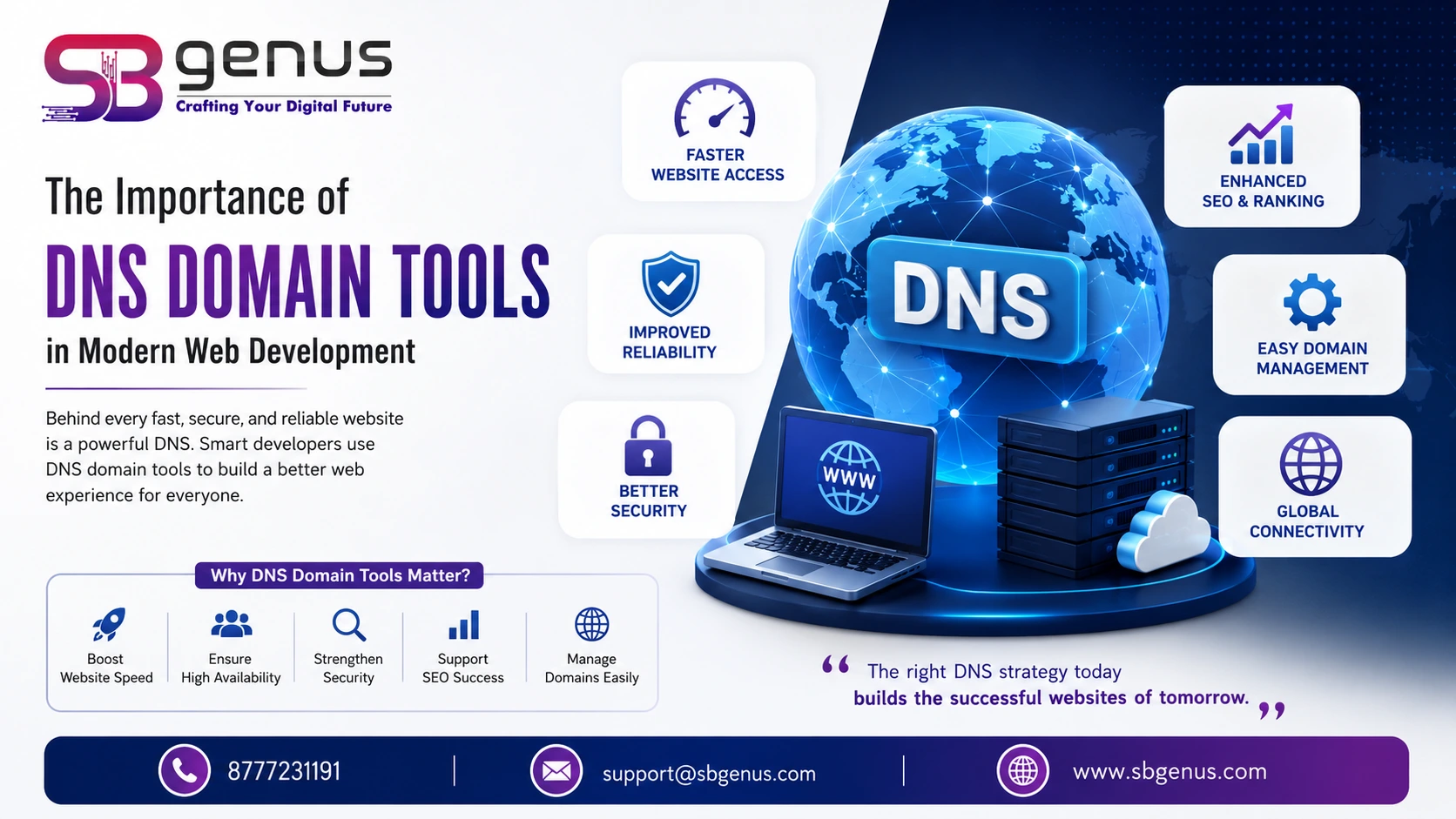
The internet functions like a vast network of interconnected computers, but humans remember names far better than numbers. This is where the Domain Name System (DNS) comes into play. DNS acts as the internet's phonebook by translating domain names like example.com into IP addresses that computers use to communicate.
As websites become increasingly complex and businesses rely heavily on their online presence, DNS Domain Tools have become indispensable for web developers, system administrators, and digital businesses. These tools simplify DNS management, improve website performance, strengthen security, and reduce downtime.
Whether you're managing a personal blog, an eCommerce platform, or a large enterprise application, understanding DNS domain tools is essential for ensuring a fast, secure, and reliable website.
One of the primary reasons DNS Domain Tools are essential in modern web development is their ability to improve website accessibility and loading speed. Every time a user enters your website URL into a browser, the Domain Name System (DNS) translates that domain name into an IP address, allowing the browser to locate and load your website.
Efficient DNS management ensures:
Since Google considers page speed a ranking factor, optimizing your DNS configuration can positively impact your website's SEO and Core Web Vitals. A well-configured DNS infrastructure helps visitors access your website quickly, reducing bounce rates and increasing engagement.
Website uptime is crucial for businesses of all sizes. Even a few minutes of downtime can lead to lost sales, reduced customer trust, and lower search engine rankings.
Modern DNS Domain Tools continuously monitor your DNS records and instantly alert you if they detect configuration errors, server failures, or DNS outages. This proactive monitoring allows developers to resolve issues before they affect website visitors.
Key benefits include:
Reliable DNS management ensures your website remains accessible 24/7.
Today's websites rely on multiple online services, making DNS management more complex than ever. A single domain may be connected to email services, cloud hosting, content delivery networks (CDNs), SSL certificates, and third-party verification platforms.
DNS Domain Tools simplify this process by allowing developers to manage all DNS records from one centralized dashboard.
Common services managed through DNS include:
Centralized DNS management reduces configuration errors, improves efficiency, and saves valuable development time.
Cybersecurity threats targeting DNS infrastructure continue to grow each year. Without proper protection, attackers can redirect website traffic, intercept user data, or disrupt online services.
Modern DNS Domain Tools include advanced security features that help protect websites from common DNS attacks.
These tools help defend against:
Many premium DNS providers also include enterprise-grade security features such as:
Implementing secure DNS management significantly reduces the risk of cyberattacks while improving website reliability.
Understanding different DNS record types is essential for effective website management. Each record serves a specific purpose and ensures that various online services function correctly.
An A Record maps a domain name to an IPv4 address, allowing browsers to locate your web server.
Example:
example.com → 192.168.1.1
A Records are among the most commonly used DNS records and are essential for website accessibility.
An AAAA Record performs the same function as an A Record but points a domain to an IPv6 address instead of IPv4.
As IPv6 adoption continues to grow, AAAA records are becoming increasingly important for modern websites.
A CNAME Record creates an alias that points one domain or subdomain to another.
Example:
www.example.com → example.com
CNAME records simplify domain management by allowing multiple subdomains to reference a single domain.
An MX Record specifies which mail servers are responsible for receiving emails for your domain.
Proper MX configuration ensures:
Incorrect MX records can prevent emails from reaching your inbox.
A TXT Record stores text-based information used for domain verification and email authentication.
Common uses include:
Proper TXT records improve email security and help prevent spoofing.
An NS Record identifies the authoritative name servers responsible for managing your domain's DNS information.
Correct NS records ensure your domain resolves accurately across the internet.
An SRV Record specifies the location of specific network services, such as:
These records help applications locate the appropriate service automatically.
A CAA Record specifies which Certificate Authorities (CAs) are authorized to issue SSL/TLS certificates for your domain.
Using CAA records improves website security by preventing unauthorized SSL certificate issuance.
Modern DNS Domain Tools offer far more than simple DNS record management. They provide comprehensive monitoring, diagnostics, security, and performance optimization features.
A DNS Lookup tool quickly retrieves important domain information, including:
This feature is invaluable for troubleshooting DNS-related issues.
Whenever you update DNS records, changes may take several hours to propagate across global DNS servers.
A DNS Propagation Checker allows you to monitor propagation status worldwide in real time, ensuring that your DNS updates have been successfully applied.
WHOIS Lookup tools provide valuable domain registration information, including:
This information helps developers verify domain ownership and monitor expiration dates.
DNS Health Monitoring continuously checks your DNS configuration for potential problems, including:
Automated monitoring helps identify issues before they impact users.
Many premium DNS providers include detailed analytics that measure:
These insights help developers optimize website speed and improve the overall user experience.
Fast DNS resolution reduces the time required for browsers to locate your website, resulting in:
Search engines prioritize websites that deliver a fast, stable, and reliable browsing experience.
Proper DNS management contributes to SEO by:
DNS Domain Tools quickly identify common issues such as:
This significantly reduces troubleshooting time.
Modern DNS dashboards provide intuitive interfaces for managing DNS records, minimizing the risk of manual configuration mistakes.
Automation features further improve accuracy and operational efficiency.
Advanced DNS management solutions include:
These capabilities help businesses recover quickly from DNS-related incidents while minimizing service disruptions.
After updating DNS settings, users in different regions may continue seeing outdated information until propagation is complete.
DNS Propagation Checkers allow developers to monitor updates across multiple global DNS servers in real time.
Even a minor configuration mistake can prevent your website from loading properly.
DNS validation tools quickly detect:
This helps prevent website outages caused by human error.
Improper MX, SPF, DKIM, or DMARC records can cause emails to:
DNS analysis tools quickly identify and resolve email-related DNS issues.
Incorrect CAA or TXT records may prevent SSL certificates from being issued or automatically renewed.
DNS validation tools verify SSL-related DNS configurations before deployment, helping maintain secure HTTPS connections.
DNS monitoring solutions continuously monitor your DNS infrastructure and immediately notify administrators if:
This enables faster incident response and minimizes downtime.
Following industry best practices ensures a secure, reliable, and high-performing DNS infrastructure.
Implementing these best practices enhances website security, improves performance, and minimizes operational risks.
Choosing the right DNS management platform can significantly improve your website's reliability, security, and performance.
Cloudflare DNS is one of the most widely used DNS providers, offering:
Google Cloud DNS is ideal for enterprise-grade infrastructure, offering:
Amazon Route 53 is a powerful DNS service designed for AWS environments, featuring:
MXToolbox is a comprehensive DNS diagnostic platform commonly used for:
DNS Checker is a popular online tool that helps developers:
These tools are essential for maintaining a secure, fast, and reliable web presence while simplifying DNS management for developers and businesses alike.
DNS Domain Tools are online platforms and software applications that help users manage, monitor, troubleshoot, and optimize DNS records. They simplify domain management while improving website performance, security, and reliability.
DNS Domain Tools improve domain name resolution, reduce website loading times, minimize downtime, and enhance user experience. Faster DNS resolution also contributes to better SEO and Core Web Vitals.
The Domain Name System (DNS) translates human-readable domain names, such as example.com, into IP addresses that computers use to locate and communicate with web servers.
The most commonly used DNS records include:
Each record serves a specific purpose, such as website hosting, email routing, or domain verification.
DNS propagation is the process of updating DNS changes across internet servers worldwide. Depending on the TTL (Time to Live) settings, propagation can take anywhere from a few minutes to 48 hours.
Modern DNS Domain Tools protect websites through features like DNSSEC, DDoS protection, activity monitoring, access controls, two-factor authentication (2FA), and alerts for unauthorized DNS changes.
An A Record maps your domain name to an IPv4 address, allowing visitors to access your website by connecting the domain to its hosting server.
An A Record points a domain directly to an IP address, while a CNAME Record points one domain or subdomain to another domain name, making domain management more flexible.
MX (Mail Exchange) Records specify which mail servers handle your domain's emails. Incorrect MX records can cause email delivery failures or messages being rejected.
Yes. Proper DNS management improves website speed, uptime, and reliability, which are important ranking factors for search engines like Google. Faster websites generally provide a better user experience and improved SEO performance.
DNSSEC (Domain Name System Security Extensions) protects your domain from DNS spoofing and cache poisoning by verifying the authenticity of DNS responses, improving overall website security.
Some of the most popular DNS Domain Tools include:
These platforms offer features such as DNS management, monitoring, security, and performance analytics.
You can troubleshoot DNS issues using DNS lookup tools, DNS propagation checkers, WHOIS lookup services, and DNS health monitoring tools. These tools help identify incorrect DNS records, propagation delays, and server-related problems.
Best practices include enabling DNSSEC, using a trusted DNS provider, maintaining accurate DNS records, configuring appropriate TTL values, enabling two-factor authentication, monitoring DNS changes, and regularly backing up DNS configurations.
It is recommended to review your DNS settings at least every few months or whenever you migrate hosting, update email services, change SSL certificates, or add new web services. Regular DNS audits help maintain security, performance, and uninterrupted website availability.
Trusted Clients



.jpg)


.jpg)
.jpg)








SB Genus is a Kolkata-based tech company specializing in custom web development, app development, digital marketing, and startup growth.


© 2017-2026 SB Genus. All rights reserved.