SB Genus
 04 Aug 2026
The Importance of Backend Development in Modern Web Applications
04 Aug 2026
The Importance of Backend Development in Modern Web Applications


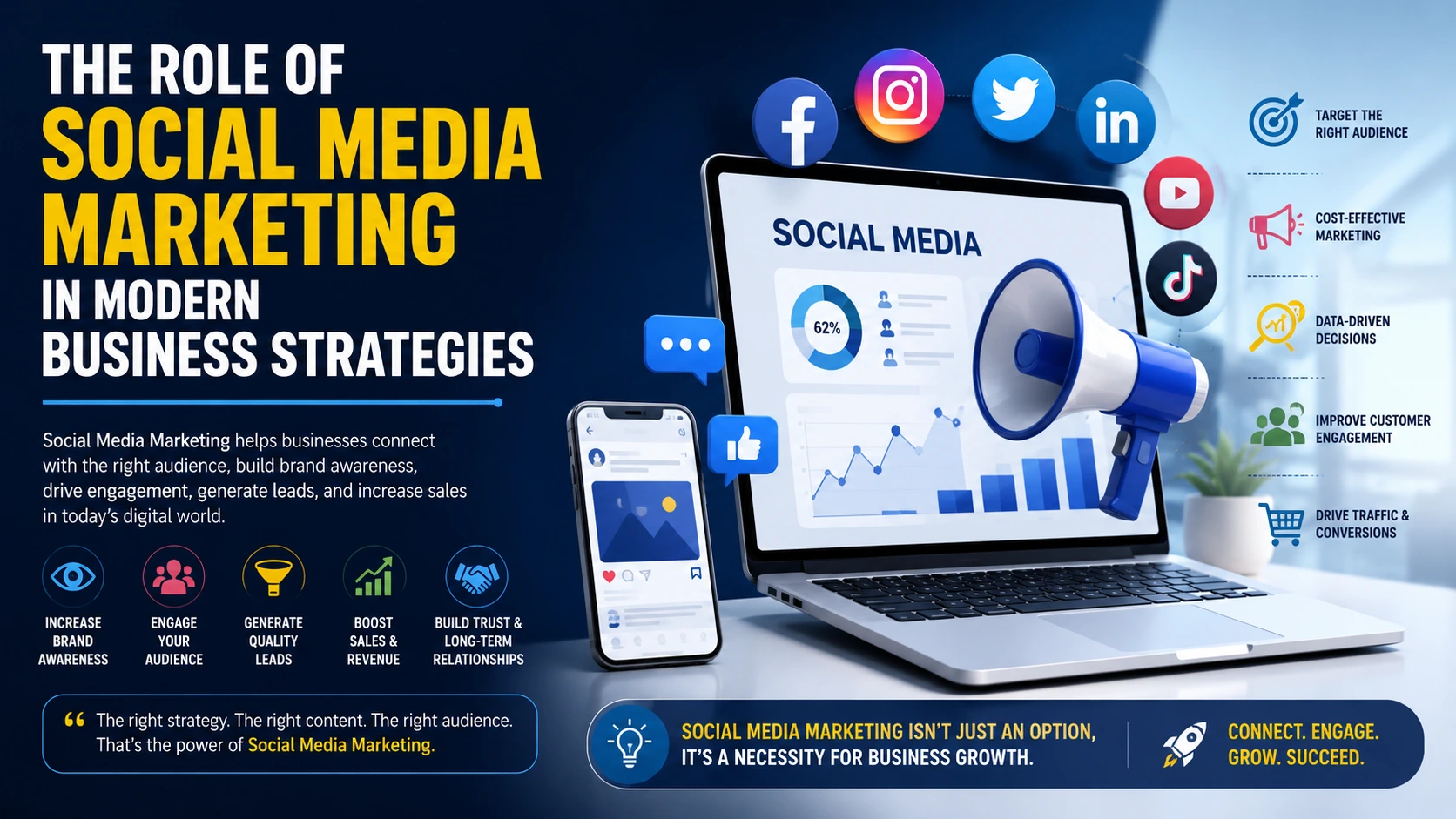
Social Media Marketing (SMM) is a digital marketing strategy that involves using social media platforms such as Facebook, Instagram, LinkedIn, X (formerly Twitter), YouTube, TikTok, and Pinterest to promote products, services, and brands. It focuses on creating and sharing valuable content, engaging with audiences, running targeted advertising campaigns, and analyzing performance to achieve business objectives.
In today's competitive digital landscape, social media marketing has become an essential component of every successful business strategy. It enables businesses to connect directly with their target audience, build brand awareness, generate qualified leads, increase website traffic, and improve customer engagement. By consistently delivering relevant and engaging content, businesses can establish trust, strengthen customer relationships, and enhance their online reputation.
A well-planned social media marketing strategy helps businesses reach potential customers at every stage of the buying journey—from brand discovery to purchase and long-term customer loyalty. Whether you are a startup, small business, or large enterprise, leveraging social media effectively can significantly improve your online visibility and drive sustainable business growth.
Unlike traditional marketing methods, social media marketing encourages two-way communication between businesses and consumers. This interactive approach allows brands to understand customer preferences, gather valuable feedback, personalize marketing efforts, and build long-lasting relationships. As a result, social media marketing has become one of the most powerful tools for increasing online visibility, improving customer satisfaction, and achieving long-term business success.
In today's digital-first world, social media marketing has become an indispensable part of every successful business strategy. With billions of active users on platforms like Facebook, Instagram, LinkedIn, YouTube, X (formerly Twitter), and Pinterest, businesses have unprecedented opportunities to connect with their target audience, build brand awareness, and drive measurable growth.
Modern consumers rely heavily on social media before making purchasing decisions. They research brands, read customer reviews, compare products and services, watch video demonstrations, and interact with businesses through comments, messages, and reviews. As a result, maintaining a strong social media presence is no longer optional—it is essential for businesses that want to remain competitive in today's digital marketplace.
An effective social media marketing strategy helps businesses increase online visibility, strengthen customer relationships, generate qualified leads, improve brand credibility, and drive long-term business success. Below are some of the key reasons why social media marketing plays a vital role in modern business growth.
One of the biggest advantages of social media marketing is its ability to increase brand awareness. Regularly publishing high-quality content, engaging with followers, and participating in trending conversations helps businesses reach a wider audience and establish a strong online presence. Even startups and small businesses can compete with larger brands by consistently creating valuable content that resonates with their target customers.
Compared to traditional marketing channels such as television, newspapers, and radio, social media marketing is a highly cost-effective digital marketing solution. Businesses can promote their products and services through organic content, influencer partnerships, and highly targeted paid advertising campaigns while maintaining complete control over their marketing budget. This makes social media an ideal platform for businesses of all sizes looking to maximize their Return On Investment (ROI).
Social media platforms enable businesses to communicate directly with customers in real time. Whether responding to inquiries, resolving complaints, or answering product-related questions, businesses can provide faster customer support and build stronger relationships. Prompt communication improves customer satisfaction, enhances trust, and strengthens brand loyalty.
One of the greatest strengths of social media marketing is access to detailed performance analytics. Platforms provide valuable insights into audience demographics, engagement rates, content performance, website clicks, conversions, and advertising results. These analytics help businesses make data-driven marketing decisions, optimize campaigns, and continuously improve their overall digital marketing strategy.
An effective social media marketing strategy offers numerous benefits that contribute to sustainable business growth and long-term customer relationships.
Every social media post, video, reel, story, infographic, or advertisement increases your brand's visibility across multiple platforms. Maintaining consistent branding, messaging, and visual identity helps customers recognize, remember, and trust your business. Greater brand recognition often leads to increased customer confidence and higher conversion rates.
Customer engagement is at the heart of successful social media marketing. Interactive content such as polls, quizzes, live videos, comments, stories, and direct messages encourages meaningful conversations between businesses and their audiences. Higher engagement levels help businesses build stronger communities, improve customer relationships, and foster long-term brand loyalty.
Sharing blog articles, landing pages, product pages, promotional offers, and educational content on social media drives targeted traffic to your website. Increased website visitors create more opportunities for lead generation, sales conversions, and improved Search Engine Optimization (SEO) performance.
Social media platforms such as Facebook, Instagram, and LinkedIn provide advanced lead generation tools that help businesses capture valuable customer information. By combining targeted advertising with compelling content and optimized landing pages, businesses can generate high-quality leads that are more likely to convert into paying customers.
A strategic social media marketing campaign helps businesses showcase products, promote special offers, highlight customer testimonials, and demonstrate product value through engaging content. These activities influence purchasing decisions, improve conversion rates, and contribute directly to increased sales and business revenue.
Although social media signals are not direct Google ranking factors, a strong social media presence supports your overall SEO strategy. Increased content sharing, website traffic, brand mentions, backlinks, and user engagement help improve online visibility, strengthen domain authority, and drive more organic traffic to your website.
Consistently providing valuable content, responding to customer feedback, and maintaining regular communication helps businesses build trust and credibility. Loyal customers are more likely to recommend your brand, leave positive reviews, and become long-term advocates, contributing to sustainable business growth and a stronger online reputation.
Choosing the right social media platforms is essential for implementing a successful social media marketing strategy. Each platform serves different audiences, industries, and marketing objectives, allowing businesses to connect with potential customers in unique ways. By understanding the strengths of each platform, businesses can maximize brand visibility, improve customer engagement, generate quality leads, and accelerate business growth.
With nearly three billion active users worldwide, Facebook remains one of the most powerful social media platforms for businesses. It offers advanced advertising tools, community-building features, and powerful audience targeting options, making it suitable for businesses of all sizes.
Businesses can leverage Facebook to increase brand awareness, generate qualified leads, drive website traffic, and build long-lasting customer relationships.
Instagram is one of the leading visual marketing platforms, making it ideal for businesses that rely on high-quality images and engaging videos. It helps brands tell compelling stories while reaching highly engaged audiences.
Instagram is particularly effective for increasing brand awareness, promoting products, driving engagement, and growing online communities.
LinkedIn is the world's leading professional networking platform and an essential channel for B2B marketing. It enables businesses to build professional relationships, establish industry authority, and generate high-quality business leads.
Businesses can use LinkedIn to publish industry insights, share company updates, recruit talent, and connect with decision-makers.
YouTube is the largest video-sharing platform and an essential part of modern video marketing strategies. Video content consistently generates high engagement and helps businesses educate, inform, and convert potential customers.
High-quality YouTube videos can improve SEO performance, increase website traffic, and build customer trust over time.
X (formerly Twitter) is designed for real-time communication and fast-paced conversations. It enables businesses to stay connected with customers, share industry updates, and participate in trending discussions.
Businesses can use X to strengthen brand visibility, improve customer support, and engage directly with their audience.
Pinterest functions as a visual search engine where users actively search for ideas, inspiration, and products. It is highly effective for businesses with visually appealing products and services.
Pinterest helps businesses generate long-term website traffic, improve product discovery, and increase online sales through visually engaging content.
One of the greatest advantages of social media marketing is its ability to improve customer engagement. Unlike traditional marketing channels, social media enables two-way communication, allowing businesses to interact directly with their audience in real time. Strong customer engagement not only improves brand loyalty but also increases customer satisfaction, encourages repeat purchases, and strengthens long-term relationships.
Businesses that actively engage with their audience are more likely to build trust, establish credibility, and create loyal brand advocates.
A successful social media engagement strategy includes activities such as:
These engagement activities create meaningful interactions that make customers feel valued and connected to the brand.
Customers are more likely to trust businesses that actively communicate, respond promptly, and provide valuable content rather than simply promoting products or services. Consistent engagement helps businesses build stronger relationships, improve customer retention, increase positive reviews, and enhance their overall online reputation.
The more engaged your audience becomes, the stronger your brand community grows. Over time, active customer engagement leads to increased brand awareness, higher conversion rates, improved customer loyalty, and sustainable business growth, making it one of the most valuable components of a successful social media marketing strategy.
A successful social media marketing strategy is built on careful planning, consistent execution, and continuous optimization. Businesses that invest in strategic social media marketing can increase brand awareness, improve customer engagement, generate qualified leads, drive website traffic, and achieve sustainable business growth. The following proven strategies can help businesses maximize the effectiveness of their social media marketing campaigns.
Every successful social media marketing campaign begins with clearly defined and measurable objectives. Setting specific goals helps businesses evaluate campaign performance, allocate resources effectively, and align their social media efforts with overall business objectives.
Establishing measurable Key Performance Indicators (KPIs) ensures every campaign contributes to long-term business success.
Understanding your target audience is essential for creating content that resonates with potential customers. Businesses should conduct audience research to identify customer preferences, behaviors, and interests before developing a social media content strategy.
The better you understand your audience, the easier it becomes to create personalized content that improves engagement, generates leads, and increases conversion rates.
Content is the foundation of every successful social media marketing strategy. High-quality, informative, and engaging content encourages users to interact with your brand, share your posts, and visit your website.
Publishing valuable and relevant content consistently helps improve customer engagement, strengthen brand authority, and increase organic reach across multiple social media platforms.
Consistency is one of the most important factors in building a strong online presence. Regular posting keeps your audience engaged, improves brand recall, and signals platform algorithms to distribute your content more effectively.
Creating a social media content calendar helps businesses organize campaigns, maintain posting consistency, and ensure a balanced mix of promotional and educational content.
A consistent publishing schedule helps businesses build trust, increase engagement, and maintain long-term customer relationships.
While organic social media marketing remains valuable, declining organic reach makes paid social media advertising an essential component of modern digital marketing strategies.
Platforms like Facebook, Instagram, LinkedIn, and YouTube offer advanced targeting options that allow businesses to reach highly relevant audiences based on demographics, interests, online behavior, and purchasing intent.
A well-optimized paid advertising campaign helps businesses achieve faster results while making the most of their marketing budget.
Tracking and analyzing campaign performance is essential for optimizing your social media marketing strategy. Most social media platforms provide detailed analytics that help businesses understand audience behavior and measure campaign effectiveness.
Regularly reviewing social media analytics enables businesses to identify successful strategies, improve underperforming campaigns, optimize advertising spend, and make data-driven marketing decisions that support long-term business growth.
The future of social media marketing is evolving rapidly as new technologies, changing consumer behaviors, and innovative digital marketing strategies continue to reshape the online landscape. Businesses that stay ahead of emerging social media marketing trends can strengthen their online presence, improve customer engagement, generate more qualified leads, and gain a competitive advantage in the digital marketplace.
From Artificial Intelligence (AI) to social commerce and short-form video marketing, the latest innovations are transforming how brands connect with their audiences. Below are some of the most influential trends shaping the future of social media marketing.
Artificial Intelligence (AI) is revolutionizing the way businesses plan, execute, and optimize their social media marketing campaigns. AI-powered tools help marketers automate repetitive tasks, analyze customer behavior, and deliver highly personalized experiences that improve engagement and conversions.
By integrating AI into their digital marketing strategies, businesses can improve efficiency, reduce marketing costs, and deliver better customer experiences.
Short-form videos have become one of the most effective content formats for increasing social media engagement and brand visibility. Content formats such as Instagram Reels, YouTube Shorts, TikTok videos, and Facebook Reels continue to attract millions of daily viewers, making video marketing an essential part of every social media strategy.
Businesses are increasingly using short-form videos for:
Brands that consistently create engaging video content are more likely to increase audience reach, improve engagement rates, and drive higher conversion rates.
Social commerce is transforming the online shopping experience by allowing customers to discover, explore, and purchase products directly within social media platforms. Features such as Instagram Shopping, Facebook Shops, Pinterest Product Pins, and TikTok Shop simplify the buying journey and reduce the need for users to visit external websites.
The growing popularity of social commerce helps businesses:
As social commerce continues to grow, businesses that integrate shopping features into their social media strategy will gain a significant competitive advantage.
Influencer marketing remains one of the most effective digital marketing strategies for building trust and reaching highly targeted audiences. Businesses are increasingly partnering with micro-influencers, industry experts, and content creators who have loyal followers and strong engagement rates.
Influencer collaborations help businesses:
Authentic influencer partnerships often produce higher engagement and better return on investment (ROI) than traditional advertising campaigns.
User-Generated Content (UGC) is becoming an essential component of successful social media marketing strategies. Photos, videos, reviews, testimonials, and social media posts created by customers are often viewed as more authentic and trustworthy than branded promotional content.
Encouraging customers to share their experiences helps businesses:
Because UGC reflects real customer experiences, it often generates higher engagement and conversion rates than conventional advertising.
Modern consumers expect personalized interactions and relevant content that reflects their interests, preferences, and online behavior. Personalized marketing has become a key factor in improving customer satisfaction, engagement, and retention.
Businesses can deliver personalized experiences through:
By leveraging customer data responsibly, businesses can create more meaningful interactions, improve conversion rates, and build stronger long-term relationships with their audience.
As digital technologies continue to evolve, businesses that embrace emerging social media marketing trends will be better positioned for long-term success. Investing in Artificial Intelligence, short-form video content, social commerce, influencer marketing, user-generated content, and personalized marketing strategies will help businesses improve customer engagement, increase online visibility, drive more qualified leads, and achieve sustainable business growth.
Organizations that continuously adapt to changing consumer expectations and digital innovations will remain competitive in the ever-evolving world of social media marketing.
Social media marketing has become one of the most powerful tools in modern business strategies. It enables organizations to build meaningful relationships, increase brand awareness, generate qualified leads, improve customer service, and drive long-term business growth.
However, success on social media requires more than simply posting content. Businesses must develop a strategic approach that includes audience research, quality content creation, consistent engagement, paid advertising, performance analysis, and adaptation to emerging trends.
As technology continues to evolve, businesses that invest in effective social media marketing strategies will strengthen their competitive advantage and build lasting connections with customers. Whether you're a startup or an established enterprise, integrating social media into your overall marketing strategy is essential for sustainable growth in today's digital economy.
Social media marketing is the practice of promoting products, services, or brands through social media platforms using organic content, paid advertising, and customer engagement strategies.
It increases brand awareness, drives website traffic, generates leads, improves customer relationships, and supports long-term business growth.
The ideal platform depends on your target audience. Facebook and Instagram are excellent for B2C businesses, while LinkedIn is ideal for B2B marketing. YouTube is highly effective for video content.
Consistency is more important than frequency. Most businesses benefit from posting 3–5 times per week while maintaining high-quality and relevant content.
Yes. Social media offers cost-effective opportunities for small businesses to reach local and global audiences, build brand awareness, and compete with larger companies.
Key performance indicators include engagement rate, reach, impressions, website traffic, lead generation, conversions, return on investment (ROI), and customer retention.
Trusted Clients



.jpg)


.jpg)
.jpg)








SB Genus is a Kolkata-based tech company specializing in custom web development, app development, digital marketing, and startup growth.


© 2017-2026 SB Genus. All rights reserved.