SB Genus
 04 Aug 2026
The Importance of Backend Development in Modern Web Applications
04 Aug 2026
The Importance of Backend Development in Modern Web Applications


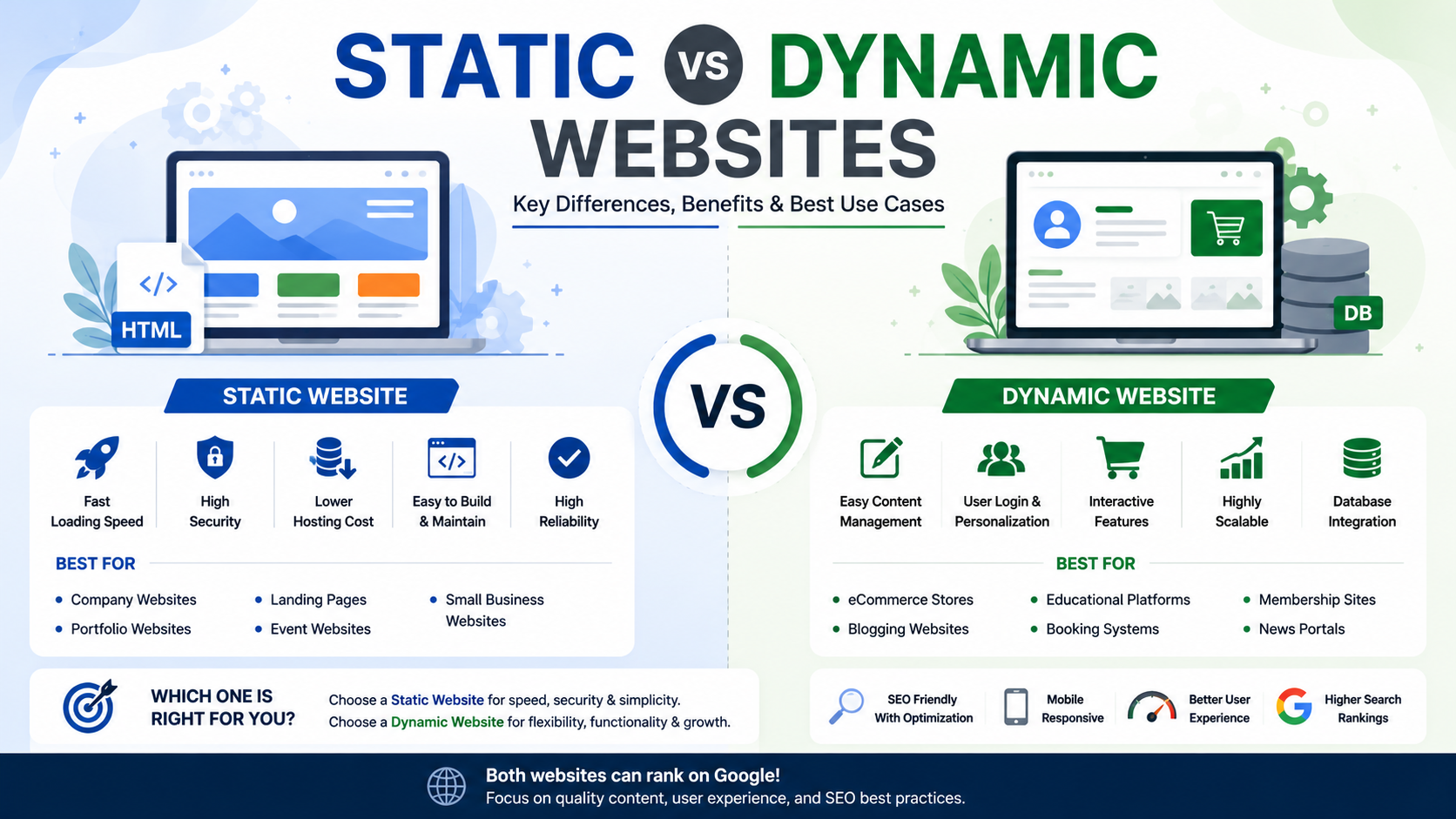
Choosing the right type of website is one of the most important decisions when establishing your online presence. Whether you're launching a personal portfolio, a business website, an eCommerce platform, or a corporate portal, understanding the differences between static and dynamic websites will help you make an informed decision.
Both website types serve different purposes and offer unique benefits. A static website is simple, lightweight, and fast, while a dynamic website is interactive, scalable, and capable of handling complex functionalities.
In this guide, we'll explore the key differences between static and dynamic websites, compare their advantages, discuss their SEO impact, and help you determine which option best suits your business needs.
A static website is a type of website that displays the same content to every visitor. Each web page is built using HTML, CSS, and JavaScript, and the content remains fixed unless a developer manually updates the source code. Unlike dynamic websites, static websites do not rely on databases or server-side programming languages to generate content.
When a visitor accesses a static website, the web server instantly delivers pre-built HTML files, resulting in faster loading speeds, improved security, and a seamless browsing experience. Due to their simplicity and cost-effectiveness, static websites are an excellent choice for businesses that require an informative online presence without frequent content updates.
A dynamic website is a website that generates content in real time based on user interactions, database information, or administrator updates. Unlike static websites, dynamic websites use server-side programming languages such as PHP, Python, ASP.NET, or Node.js along with databases like MySQL to create personalized and interactive web pages.
Dynamic websites allow business owners or administrators to update content through a Content Management System (CMS) without modifying the website's code. This flexibility makes them ideal for businesses that frequently publish new content, manage products, or provide personalized user experiences.
Whether it's an online store, news portal, or educational platform, dynamic websites offer advanced functionality, better scalability, and interactive features that support business growth.
A static website is an excellent choice for businesses and individuals who need a fast, secure, and cost-effective online presence. Since static websites consist of pre-built web pages, they offer several advantages that improve website performance, user experience, and search engine optimization.
One of the biggest advantages of a static website is its exceptional loading speed. Since the pages are pre-built and delivered directly to the user's browser, there is no need for server-side processing or database queries. This results in faster page load times, improved user experience, lower bounce rates, and better SEO rankings, making static websites ideal for businesses that prioritize website performance.
Static websites are generally more secure than dynamic websites because they do not rely on databases or server-side scripting. With fewer components exposed to potential cyber threats, they have a smaller attack surface, reducing the risk of hacking, malware, and data breaches. This makes static websites a reliable choice for businesses that prioritize website security.
Since static websites require minimal server resources, they are significantly more affordable to host and maintain. Businesses can use basic web hosting plans without sacrificing performance, making static websites a cost-effective solution for startups, freelancers, and small businesses.
Deploying a static website is simple and hassle-free. Developers can upload HTML, CSS, and JavaScript files directly to a web server without configuring databases or backend applications. This streamlined deployment process reduces maintenance efforts and ensures greater reliability.
Because static websites do not depend on databases or server-side processing, they are less prone to technical failures and downtime. They consistently deliver fast and reliable performance, ensuring visitors enjoy a smooth browsing experience even during periods of high traffic.
A dynamic website is designed for businesses that require flexibility, scalability, and interactive functionality. By generating content in real time and integrating with databases, dynamic websites provide a personalized user experience and make website management significantly easier.
One of the primary benefits of a dynamic website is its ability to simplify content management. Using a Content Management System (CMS) such as WordPress, administrators can update pages, publish blog posts, manage products, and edit website content without any programming knowledge. This makes dynamic websites ideal for businesses that frequently update their information.
Dynamic websites support a wide range of interactive functionalities that enhance user engagement and improve the overall customer experience. These features include:
These interactive capabilities make dynamic websites suitable for eCommerce businesses, educational platforms, healthcare portals, and service-based industries.
Dynamic websites can display personalized content based on user preferences, browsing history, location, or previous interactions. This creates a more engaging experience for visitors by offering customized product recommendations, relevant content, and personalized dashboards, ultimately improving customer satisfaction and conversion rates.
As your business grows, a dynamic website can easily accommodate new pages, products, services, and advanced features without requiring a complete redesign. Its scalable architecture makes it an excellent long-term investment for startups, enterprises, and organizations planning future expansion.
Dynamic websites seamlessly integrate with databases, enabling businesses to manage large volumes of information efficiently. Whether it's thousands of products, blog articles, customer records, bookings, or transactions, database integration ensures data is organized, searchable, and easy to manage. This functionality is essential for eCommerce websites, CRM systems, educational portals, and enterprise applications.
Choosing between a static website and a dynamic website depends on your business goals, budget, content strategy, and future growth plans. Both website types offer unique advantages, and selecting the right one can significantly impact your online presence, user experience, and digital marketing success.
Whether you're building a simple business website or a feature-rich online platform, understanding your requirements will help you choose the most suitable website solution.
A static website is the ideal choice if your business requires a fast, secure, and cost-effective website with minimal content updates. It is perfect for businesses that want a professional online presence without the complexity of a database-driven system.
A static website is recommended if you:
A dynamic website is the better option for businesses that require frequent content updates, advanced functionality, and interactive user experiences. It offers greater flexibility and scalability, making it suitable for growing businesses and organizations.
A dynamic website is recommended if you:
A common misconception is that static websites rank better than dynamic websites in search engine results. In reality, both website types can achieve excellent rankings on Google and other search engines when they are properly optimized using modern SEO best practices.
Search engines evaluate websites based on factors such as page speed, content quality, mobile responsiveness, user experience, and technical SEO—not simply whether the website is static or dynamic.
Static websites naturally offer several SEO advantages due to their lightweight architecture and fast performance.
Key SEO benefits include:
Modern dynamic websites can perform just as well in search engines when optimized correctly. With the right technical SEO strategies, they provide excellent visibility and support content-driven marketing efforts.
To maximize SEO performance, dynamic websites should implement:
Both static and dynamic websites can achieve top search engine rankings. The deciding factors are high-quality content, technical optimization, website speed, responsive design, and a positive user experience. Choosing the right website architecture should align with your business objectives rather than SEO myths.
The ideal website type depends on your business model, the level of user interaction required, and how often your content changes.
Static websites are best suited for businesses that need a professional online presence with limited updates.
Common examples include:
Dynamic websites are designed for businesses that require advanced functionality, real-time content updates, and user interaction.
Common examples include:
When comparing a static website vs a dynamic website, there is no one-size-fits-all answer. The better option depends entirely on your business requirements and long-term digital strategy.
A static website is an excellent choice if your primary goal is to create a fast, secure, and affordable business website with minimal maintenance. It is ideal for businesses that only need informational pages and do not update content frequently.
On the other hand, a dynamic website is better suited for businesses that require regular content updates, customer interaction, online transactions, personalized user experiences, and future scalability. It provides the flexibility needed to support business growth and evolving customer needs.
Ultimately, the best website for your business depends on factors such as your budget, content management requirements, desired functionality, and future expansion plans. By choosing the right website type, you can create a strong online presence that supports your business goals while delivering an exceptional user experience.
Understanding the difference between static and dynamic websites is essential before starting your web development journey.
Static websites are fast, secure, affordable, and ideal for businesses that need a simple online presence. Dynamic websites, on the other hand, offer powerful features, scalability, personalized experiences, and easier content management, making them perfect for businesses that expect growth and regular interaction with users.
Regardless of the option you choose, focusing on responsive design, fast loading speeds, high-quality content, strong security, and SEO best practices will ensure your website delivers an excellent experience to both users and search engines.
Investing in the right website today lays the foundation for your digital success tomorrow.
Both can rank well on search engines. Success depends on page speed, content quality, mobile optimization, technical SEO, and user experience rather than the website type.
Yes. Static websites generally cost less to develop, host, and maintain because they don't require a database or server-side processing.
Yes. Many businesses start with a static website and upgrade to a dynamic website as their needs grow.
Dynamic websites are the preferred choice because they support product catalogs, shopping carts, customer accounts, payment gateways, and inventory management.
Dynamic websites involve server-side processing, which can add some overhead. However, with proper optimization, caching, and quality hosting, they can achieve excellent performance.
Static websites generally have a smaller attack surface because they don't rely on databases or server-side applications. Dynamic websites can also be highly secure when regularly updated and maintained.
Trusted Clients



.jpg)


.jpg)
.jpg)








SB Genus is a Kolkata-based tech company specializing in custom web development, app development, digital marketing, and startup growth.


© 2017-2026 SB Genus. All rights reserved.