SB Genus
 04 Aug 2026
The Importance of Backend Development in Modern Web Applications
04 Aug 2026
The Importance of Backend Development in Modern Web Applications


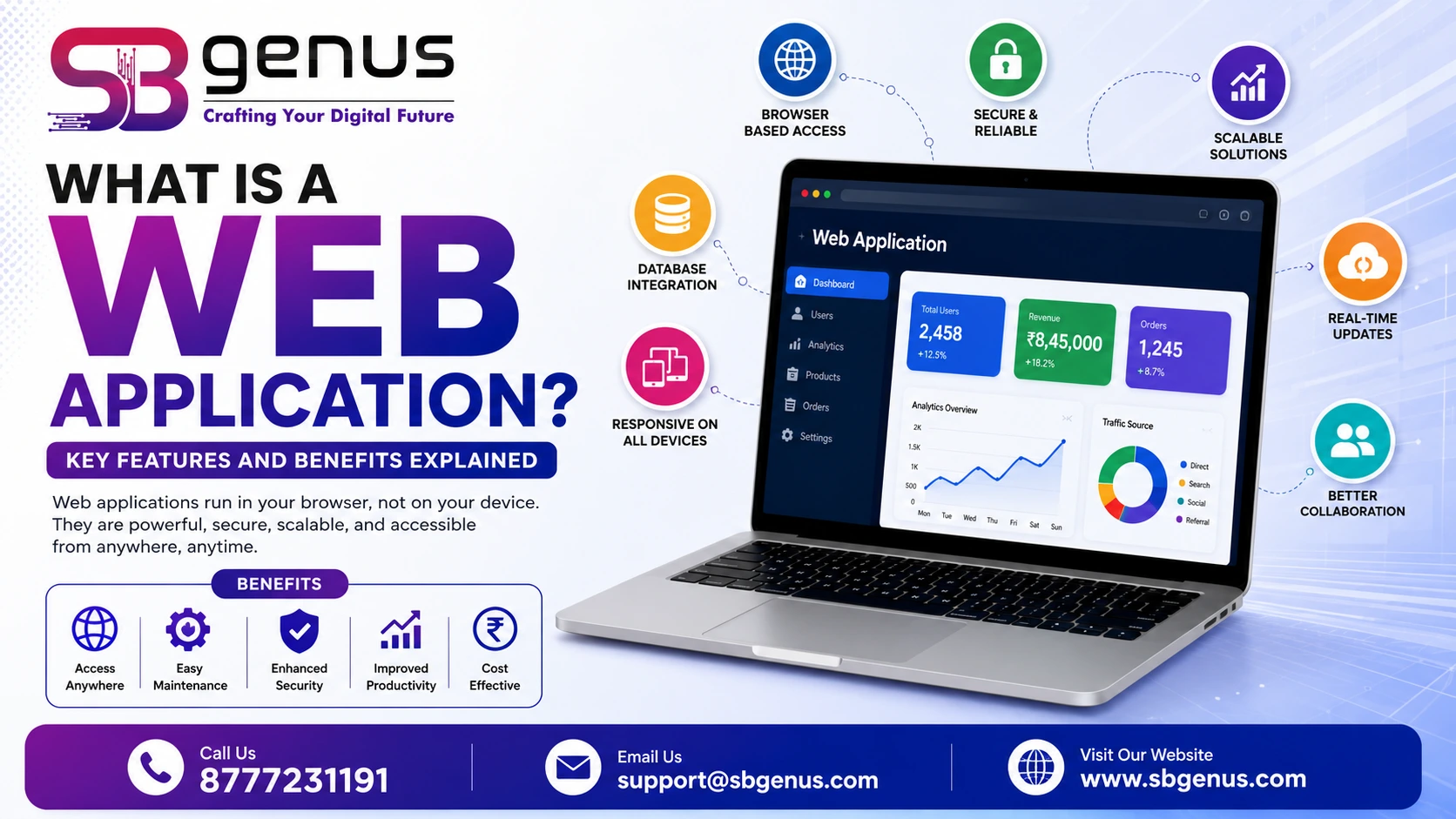
In today's digital-first world, businesses are constantly looking for smarter ways to streamline operations, improve customer engagement, and increase productivity. One of the most powerful technologies enabling this transformation is the web application.
From online banking and e-commerce platforms to customer relationship management (CRM) systems and project management tools, web applications have become an essential part of everyday business operations. Unlike traditional desktop software, web applications run directly through a web browser, making them accessible from virtually anywhere with an internet connection.
Whether you're a startup, small business, or large enterprise, understanding web applications can help you make informed decisions about digital transformation.
In this comprehensive guide, we'll explain what a web application is, how it works, its key features, benefits, and why investing in custom web application development can accelerate business growth.
A web application is a software program that runs on a web server and is accessed through an internet browser such as Google Chrome, Microsoft Edge, Mozilla Firefox, or Safari. Unlike traditional desktop software, users do not need to download or install a web application on their devices. Instead, they simply open a web browser, visit the application's URL, and begin using its features. Web applications are designed to help users perform specific tasks such as managing customer data, shopping online, booking appointments, or collaborating with teams. Because they are internet-based, users can access them from virtually anywhere using a desktop, laptop, tablet, or smartphone.
A web application works through a client-server architecture. When a user interacts with the application through a browser, such as by logging in, searching for information, or submitting a form, the browser sends a request to the web server. The server processes this request using programming languages like PHP, Python, Node.js, or Java and communicates with a database if data needs to be stored or retrieved. Once the processing is complete, the server sends the requested information back to the browser, where it is displayed to the user. This entire process occurs within seconds, providing a seamless and responsive user experience.
There are several types of web applications, each designed to serve different business needs. Static web applications display fixed content and are commonly used for portfolios or company profile websites. Dynamic web applications, on the other hand, generate content based on user interactions and database information, making them ideal for social media platforms and news portals. E-commerce web applications enable businesses to sell products online by offering features such as shopping carts, secure payment gateways, and order tracking. Portal web applications provide personalized dashboards for students, employees, or customers after they log in. Progressive Web Applications (PWAs) combine the functionality of websites and mobile apps, offering faster performance, offline access, and push notifications. Enterprise web applications are built to automate complex business processes such as human resource management, customer relationship management, accounting, and inventory management.
Modern web applications come equipped with numerous features that improve usability, security, and performance. One of their primary advantages is browser-based accessibility, allowing users to access the application from any internet-enabled device without installing additional software. Responsive design ensures that the application functions smoothly across desktops, tablets, and smartphones, providing a consistent user experience.
Security is another essential feature, as web applications typically include secure login systems, encrypted passwords, role-based access controls, and multi-factor authentication to protect sensitive information. Database integration enables efficient storage, retrieval, and management of business data. Many modern applications also support real-time updates, allowing users to receive instant notifications, live chat messages, or order status updates without refreshing the page.
Cloud-based storage allows users to access the latest information from any location while ensuring data synchronization across multiple devices. Scalability enables businesses to expand the application's features and accommodate more users as the organization grows. Additionally, API integration makes it possible to connect the application with payment gateways, CRM software, SMS services, email platforms, and accounting tools. Regular server-side updates ensure that every user automatically receives the latest features and security improvements without manual installations.
Web applications offer numerous advantages for businesses of all sizes. Since they can be accessed from anywhere with an internet connection, employees can work remotely while customers enjoy uninterrupted access to services. Unlike desktop software, web applications require minimal maintenance because updates are performed centrally on the server rather than on individual devices.
Another significant benefit is improved collaboration, as multiple users can access the same data in real time, increasing productivity and reducing communication delays. Businesses can also automate repetitive tasks, saving valuable time and allowing employees to focus on strategic work. Web applications enhance customer experiences by offering features such as online bookings, self-service portals, live order tracking, and instant communication.
Furthermore, centralized security measures such as SSL encryption, firewalls, and automated backups help protect sensitive business information. Since web applications are often hosted in the cloud, businesses can reduce infrastructure costs while enjoying better scalability, flexibility, and operational efficiency.
Many of the digital platforms people use every day are web applications. Google Docs enables users to create and edit documents collaboratively in real time, while Gmail allows users to send and manage emails through a web browser. Platforms such as Trello and Notion help teams organize projects and collaborate effectively. Shopify provides businesses with powerful e-commerce capabilities, and Salesforce offers advanced customer relationship management solutions. Canva simplifies graphic design through a browser-based interface, while Microsoft 365 Online allows users to access Word, Excel, and PowerPoint without installing desktop software. These examples demonstrate how web applications have transformed communication, productivity, and business operations.
Web applications are widely adopted across various industries because they simplify operations and improve customer experiences. In healthcare, they are used for appointment scheduling, electronic medical records, and patient management systems. Educational institutions rely on web applications for online learning platforms, student portals, and examination management systems. Retail businesses use them for e-commerce, inventory management, and point-of-sale solutions.
Financial institutions leverage secure web applications for online banking, digital payments, and loan management services. Manufacturing companies utilize web applications to monitor production, manage warehouses, and optimize supply chains. In the hospitality industry, hotels and restaurants depend on web applications for reservations, customer relationship management, and loyalty programs.
Selecting the right web application requires careful evaluation of your business objectives, target audience, scalability requirements, and security needs. It is also important to consider integration capabilities with existing business tools, budget constraints, future maintenance requirements, and user experience. Choosing an experienced web application development company ensures that your solution is secure, scalable, and tailored to your unique business processes, helping you achieve long-term success.
SB Genus specializes in delivering scalable, secure, and customized web applications tailored to diverse business needs.
Our expertise includes:
With modern technologies, responsive designs, and a focus on security, SB Genus helps businesses streamline operations and accelerate digital transformation.
Web applications have transformed how businesses operate by offering secure, scalable, and browser-based solutions that are accessible from anywhere. They improve efficiency, reduce maintenance costs, enhance collaboration, and provide a better user experience across industries.
Whether you're looking to automate internal workflows, launch an online platform, or improve customer engagement, investing in a professionally developed web application can provide long-term value and a competitive advantage. By understanding the features and benefits outlined in this guide, you'll be better equipped to choose the right solution for your organization's digital growth.
A web application is browser-based software that enables users to perform tasks online without installing software on their devices.
A website primarily provides information, while a web application allows users to interact with data, perform actions, and complete specific tasks such as shopping, booking, or managing records.
No. Users access web applications through a web browser, eliminating the need for local installation.
Yes. Modern web applications use SSL encryption, secure authentication, role-based access control, firewalls, and regular security updates to protect data.
Yes. Most modern web applications are responsive and work seamlessly on smartphones, tablets, laptops, and desktop computers.
Common technologies include PHP, JavaScript, Python, Java, ASP.NET, Node.js, HTML5, CSS3, and frameworks such as Laravel, React, Angular, and Vue.js.
Businesses in healthcare, education, retail, finance, logistics, manufacturing, hospitality, and professional services can all benefit from web applications to improve efficiency and customer experience.
The cost depends on the application's complexity, features, integrations, design requirements, and development timeline. Simple applications may cost significantly less than enterprise-grade solutions with advanced functionality.
Yes. Most web applications can integrate with payment gateways, CRM systems, ERP software, email marketing platforms, SMS services, accounting tools, and other APIs.
A custom web application is tailored to your specific business processes, offers greater flexibility, scales with your growth, integrates with your existing systems, and provides a unique competitive advantage.
Trusted Clients



.jpg)


.jpg)
.jpg)








SB Genus is a Kolkata-based tech company specializing in custom web development, app development, digital marketing, and startup growth.


© 2017-2026 SB Genus. All rights reserved.