

 SB Genus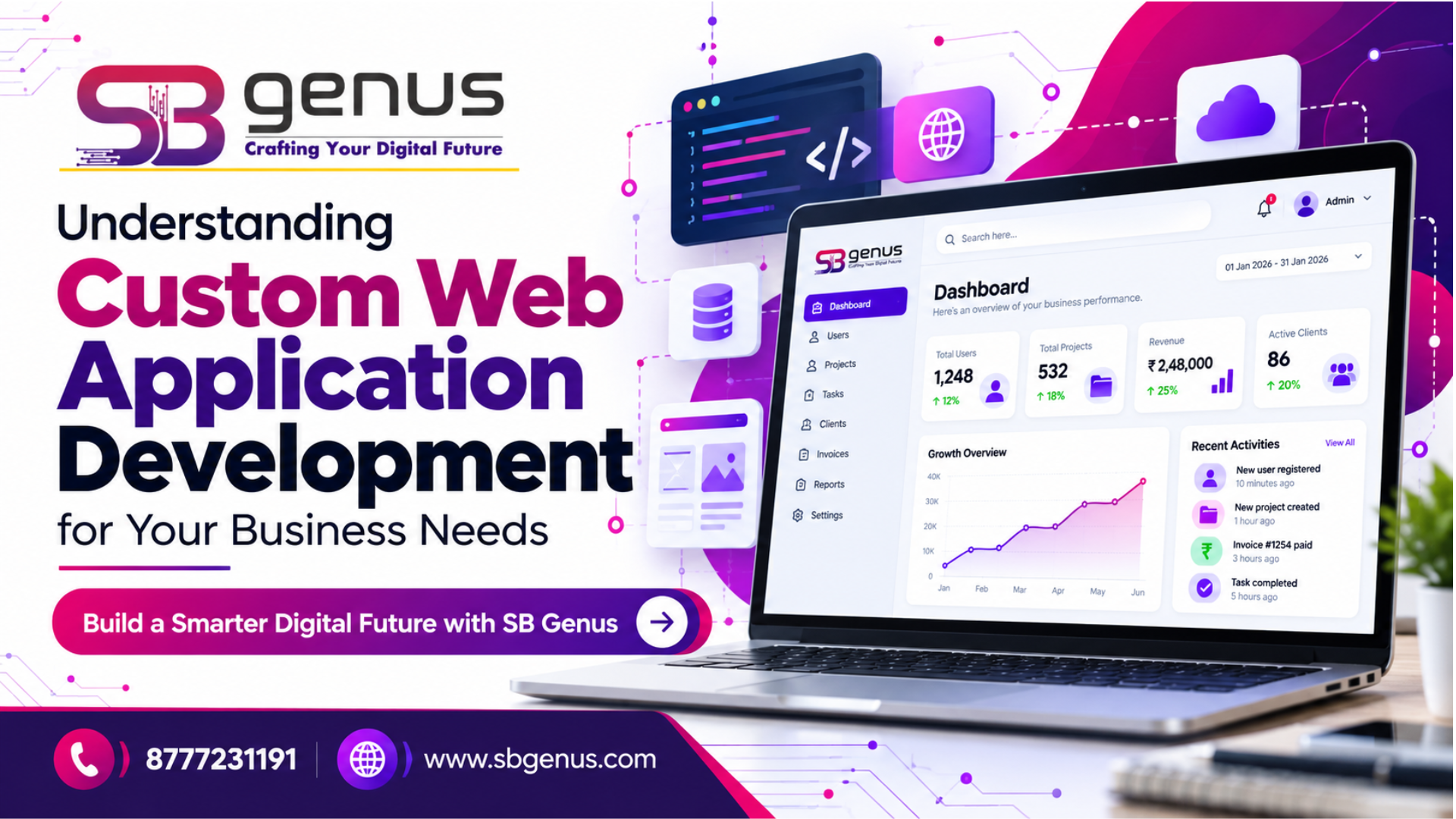
 14 Oct 2026
Understanding Custom Web Application Development for Your Business Needs
14 Oct 2026
Understanding Custom Web Application Development for Your Business Needs



The digital landscape has changed the way businesses operate, communicate with customers, and deliver products and services. Today, having a traditional website is often not enough. Customers expect businesses to provide fast, convenient, interactive, and personalized digital experiences. This growing demand has made web application development an essential part of modern business strategy.
Web applications allow businesses to offer interactive services directly through web browsers without requiring users to install traditional desktop software. From online banking and e-commerce platforms to customer portals, booking systems, learning management platforms, CRM systems, and business management tools, web applications have become an important part of everyday digital life.
For businesses of all sizes, investing in professional web application development can improve customer engagement, automate processes, reduce operational costs, and create opportunities for long-term growth. As technology continues to evolve, web applications are becoming more powerful, flexible, and important than ever.
Web application development refers to the process of designing, building, testing, and maintaining applications that operate through web browsers. Unlike simple websites, web applications are generally interactive and allow users to perform specific tasks.
For example, an e-commerce web application may allow customers to browse products, create accounts, add products to a shopping cart, make payments, and track orders. Similarly, an institute management web application can allow administrators, teachers, students, and parents to access different features based on their roles.
Modern web applications are usually developed using technologies such as HTML, CSS, JavaScript, PHP, Python, Java, Node.js, databases, APIs, and various development frameworks. The technology stack is selected according to the application's requirements, expected traffic, security needs, and future scalability.
The increasing dependence on digital services has made web applications important for both businesses and customers. A well-developed web application can bring multiple business functions together within a single digital platform.
Instead of relying on separate systems for customer management, billing, communication, inventory, reporting, and sales, businesses can develop customized web applications that connect these processes. This can make operations more organized and reduce unnecessary manual work.
Web applications are also accessible from different devices and locations as long as users have an internet connection and an appropriate browser. This flexibility is particularly valuable for businesses with remote employees, multiple branches, or customers located in different regions.
Customer expectations have changed significantly in the digital era. People want services that are quick, simple, convenient, and available whenever they need them. A web application can help businesses meet these expectations by providing users with direct access to services and information.
For instance, an online booking application can allow customers to schedule appointments without calling the business. An e-commerce platform can provide product information, payment options, order tracking, and customer support through one system.
Personalized dashboards, automated notifications, search functionality, user accounts, and real-time updates can further improve the overall customer experience. When customers find a digital platform easy to use, they are more likely to return and build a long-term relationship with the business.
One of the major advantages of web applications is scalability. A properly designed application can grow alongside a business. As the number of customers, transactions, employees, or products increases, the application can be upgraded to handle additional requirements.
This is particularly important for growing businesses. Instead of replacing an entire system whenever the business expands, developers can modify and extend the existing application by adding new features, integrations, user roles, or automation.
Cloud technologies and modern hosting infrastructure can further support scalability by providing businesses with flexible computing and storage resources. This makes web applications suitable for startups as well as established organizations.
Manual processes can consume significant amounts of time and increase the possibility of human error. Web applications can automate many repetitive business activities and help employees focus on more valuable tasks.
For example, a customized business application can automate invoice generation, customer records, attendance tracking, inventory updates, reporting, appointment scheduling, or employee management. Instead of maintaining multiple spreadsheets or paper records, employees can work through a centralized digital system.
Automation can improve accuracy, reduce duplication, and make important information easier to access. As a result, businesses can improve productivity while potentially reducing operational costs.
Data has become one of the most valuable resources for modern businesses. Web applications can collect, organize, and present business data in a structured manner, helping management make more informed decisions.
A business management application, for example, can provide information about sales performance, customer activity, inventory levels, revenue, and other important indicators. Managers can use dashboards and reports to identify trends, understand customer behavior, and evaluate business performance.
Having accurate and accessible data can help organizations move away from decisions based solely on assumptions. Instead, businesses can use real-time or regularly updated information to plan strategies and respond to changing market conditions.
As businesses increasingly depend on digital platforms, security has become a critical consideration in web application development. Applications may handle sensitive information such as customer details, login credentials, financial transactions, and business records.
Professional development practices can help protect applications through secure authentication, authorization, encryption, input validation, secure database management, regular updates, backups, and monitoring.
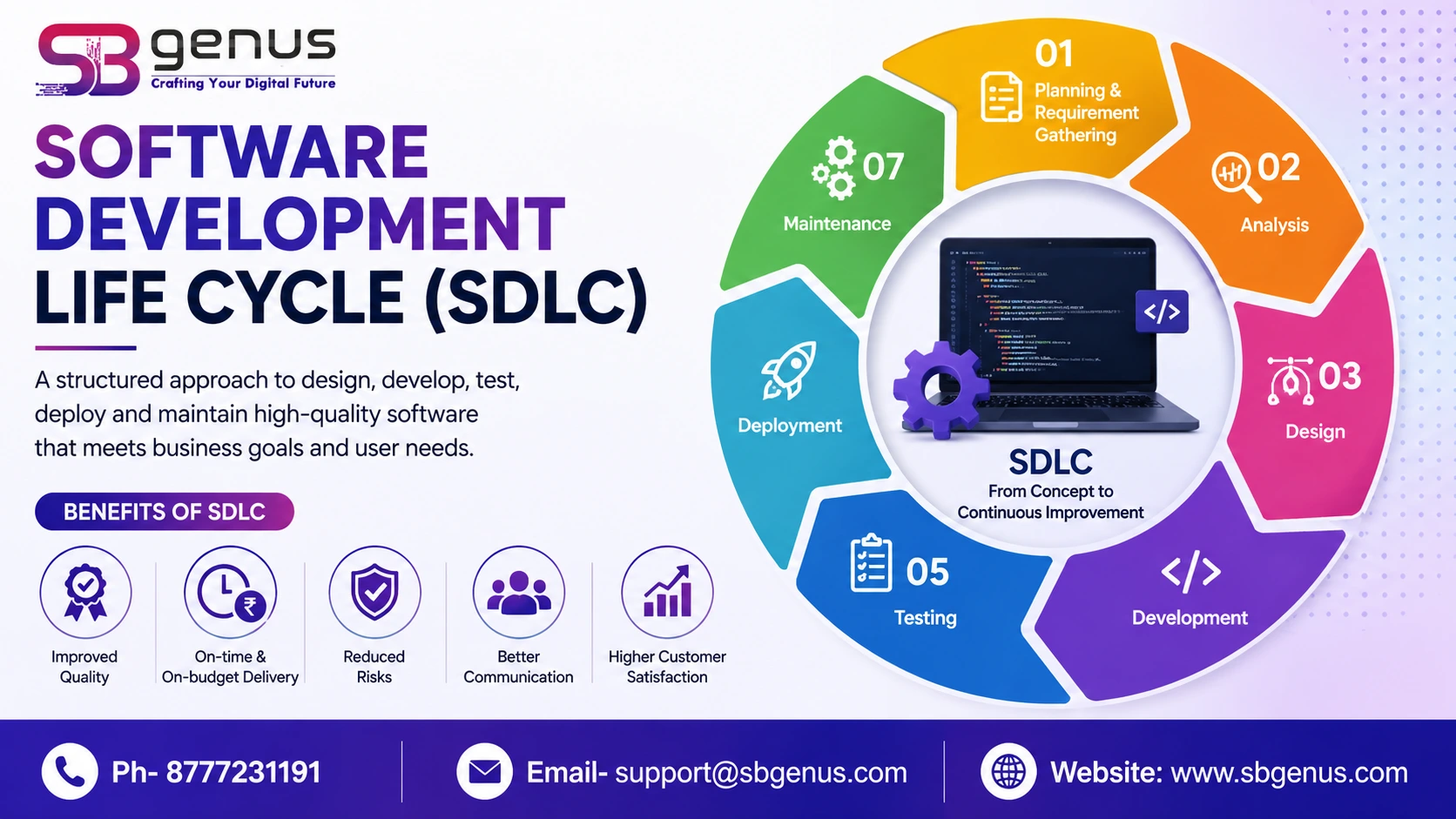
Security should not be treated as an afterthought. It needs to be considered throughout the development lifecycle, from the initial architecture and database design to deployment and ongoing maintenance. A secure and reliable application can help protect both business information and customer trust.
A significant portion of internet activity now takes place through smartphones and tablets. Therefore, modern web applications need to provide a consistent experience across different screen sizes and devices.
Responsive web application development allows interfaces to adapt to desktops, laptops, tablets, and smartphones. A mobile-friendly application can make it easier for customers and employees to access services while they are away from a computer.
Performance is equally important. Slow-loading pages or complicated interfaces can frustrate users and increase the likelihood that they will leave the platform. Modern web development therefore focuses not only on appearance but also on speed, usability, accessibility, and overall performance.
In competitive industries, digital capabilities can influence how customers perceive a business. Companies that provide convenient online services can often create a stronger customer experience than businesses that depend entirely on traditional processes.
A customized web application can also differentiate a business from competitors. Instead of using a generic solution with limited functionality, organizations can build applications around their specific workflows and customer requirements.
For example, a logistics company can develop a platform for shipment tracking and fleet management, while an educational institution can create a learning management system for students and teachers. A healthcare organization can provide appointment scheduling and patient portals. These applications can become important components of a company's overall digital strategy.
Web application development is no longer simply a technology investment; it has become an important part of modern business growth and digital transformation. From improving customer experiences and automating business processes to supporting scalability, data-driven decision making, security, and competitive differentiation, web applications can provide significant long-term value.
As customers become increasingly comfortable with digital services, businesses need to focus on creating platforms that are accessible, secure, responsive, efficient, and easy to use. A well-planned web application can help organizations adapt to changing customer expectations while creating a strong foundation for future growth.
In today's digital landscape, businesses that strategically adopt web application development can improve their operations, strengthen customer relationships, and remain better prepared for an increasingly technology-driven future.
1. What is web application development?
Web application development is the process of creating interactive applications that run through web browsers and allow users to perform specific tasks online.
2. Why is web application development important for businesses?
It helps businesses improve customer experiences, automate processes, manage data efficiently, reduce manual work, and support digital growth.
3. What is the difference between a website and a web application?
A website primarily provides information, while a web application allows users to interact with the system and perform functions such as booking, purchasing, managing accounts, or accessing dashboards.
4. Can web applications be customized for specific business needs?
Yes. Custom web applications can be designed around a company's specific processes, workflows, users, and business requirements.
5. Are web applications accessible on mobile devices?
Yes. Responsive web applications can be designed to work across smartphones, tablets, laptops, and desktop computers.
6. How can web applications improve customer experience?
They can provide convenient features such as online booking, customer accounts, personalized dashboards, instant notifications, online payments, and easy access to services.
7. Can web applications automate business processes?
Yes. Web applications can automate tasks such as billing, invoicing, attendance management, inventory updates, appointment scheduling, reporting, and customer management.
8. Are web applications scalable?
Yes. A properly developed web application can be scaled to accommodate increasing users, transactions, data, and business requirements.
9. How do web applications help businesses manage data?
They can collect, organize, store, and analyze business information in a centralized system, making data easier to access and use for decision-making.
10. Are web applications secure?
Web applications can be made secure using techniques such as secure authentication, authorization, encryption, input validation, regular updates, backups, and security monitoring.
11. How much does web application development cost?
The cost depends on factors such as application complexity, features, design, integrations, technology, security requirements, and development time. A customized application generally requires a detailed project assessment before pricing.
12. How long does it take to develop a web application?
Development time varies according to the project's scope and complexity. A simple application may take a few weeks, while larger platforms can require several months.
13. Can a web application integrate with other software and services?
Yes. Web applications can integrate with payment gateways, APIs, CRM systems, accounting software, email services, SMS platforms, maps, social media platforms, and other third-party services.
14. Why should businesses invest in custom web application development?
Custom development allows businesses to create solutions that match their exact requirements rather than adjusting their operations to the limitations of a generic software product.
15. How can web application development support long-term business growth?
A well-designed web application can improve efficiency, enhance customer engagement, automate operations, provide valuable business data, and scale with the organization as its needs grow.
Trusted Clients



.jpg)


.jpg)
.jpg)

















.png)

SB Genus is a Kolkata-based tech company specializing in custom web development, app development, digital marketing, and startup growth.


© 2017-2026 SB Genus. All rights reserved.
.png)
.jpeg)


